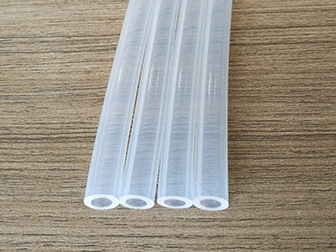
Choosing a food grade silicone hose requires more than checking whether it is suitable for food contact. Different processing applications involve different liquids, temperatures, pressures, and cleaning procedures. Selecting the wrong hose can lead to compatibility issues, installation problems, or premature replacement.
This guide covers common food processing applications, key specifications for beverage transfer, and the compliance requirements buyers should check before purchasing.
Key Takeaways
- Hose suitability depends on the food or beverage and the operating conditions.
- Inner diameter, working pressure, and reinforcement affect hose selection.
- Food-contact compliance must match the intended application and target market.
- Cleaning procedures should be considered alongside operating temperature.
Where Are Food Grade Silicone Hoses Used in Food Processing?
Food processing equipment handles a wide range of liquids. The required hose construction depends on the medium being transferred and the conditions within the production line.
Dairy and Liquid Food Transfer
Food processing lines may use silicone hoses to transfer milk, liquid dairy products, edible oils, syrups, and other ingredients between tanks, pumps, and processing equipment.
Selection depends on the specific medium, including its fat content, acidity, temperature, and contact duration. Buyers should verify material compatibility for the intended application rather than assume that one hose is suitable for every food product.
The hose and its connections should also suit the cleaning procedures used in the production line.
Beverage Production and Filling
Silicone hoses can connect equipment used to transfer beer, juice, and other beverages during production and filling.
For these applications, buyers should check hose dimensions, fitting compatibility, and hygiene requirements. Acidic juices and alcoholic beverages may require different compatibility assessments depending on their composition and operating conditions.
The hose must also fit the equipment layout without excessive bending or compression, which can affect installation and flow.
Fermented Food Processing
Soy sauce, vinegar, and other fermented food products may require flexible connections between storage tanks and processing equipment.
Because some fermented products are acidic, buyers should assess compatibility based on the product’s composition, concentration, temperature, and contact duration. General food-grade labeling alone does not establish suitability for every fermented food.
Food Grade Silicone Hose Specifications for Beverage Transfer
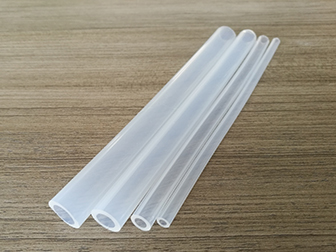
When sourcing a hose for beverage transfer, buyers should evaluate several specifications together rather than select a product based on inside diameter alone.
| Specification | What to Check |
| Inner and outer diameter | Match the required flow path, fittings, and installation space. |
| Working temperature | Confirm the expected operating temperature and cleaning conditions. |
| Working pressure | Check the rated pressure under the intended operating conditions. |
| Reinforcement | Determine whether additional pressure resistance or dimensional stability is needed. |
| Material compatibility | Verify suitability for the beverage and relevant cleaning chemicals. |
| Compliance documentation | Confirm that the documents cover the selected product and intended use. |
Match Hose Dimensions to Flow Requirements
The inner diameter affects flow velocity and pressure loss. An undersized hose may restrict flow, while an unnecessarily large diameter can increase costs and complicate installation.
Consider the required flow rate, line length, pump characteristics, and fitting dimensions together. Bends and routing restrictions can also influence system performance.
Select the Appropriate Hose Construction
An unreinforced hose may suit some low-pressure applications, while a reinforced construction may be needed when greater pressure resistance or dimensional stability is required.
The choice should be based on the actual operating conditions and the manufacturer’s documented specifications. Reinforcement alone does not establish a hose’s pressure rating.
Check Cleaning and Temperature Requirements
A hose’s rated operating temperature does not automatically indicate that it can withstand every cleaning or sterilization process. Hot-water cleaning, chemical cleaning, and steam exposure can impose different requirements.
Confirm that the selected hose is suitable for the complete operating and cleaning cycle, including any applicable temperature limits.
What to Check Before Choosing an FDA Silicone Hose
Food-contact compliance is an important purchasing consideration, but buyers should distinguish between a product’s general description and the documentation supporting its intended use.
Verify Applicable Food-Contact Requirements
For the US market, FDA regulation 21 CFR 177.2600 addresses rubber articles intended for repeated use in contact with food, including applicable extraction requirements and conditions of use. Buyers should verify that the selected product falls within the relevant provisions. Read 21 CFR 177.2600.
For the European market, Regulation (EC) No 1935/2004 establishes a general framework for materials and articles intended to contact food. Additional requirements may apply depending on the material, product, and market.
When sourcing an FDA approved silicone hose, buyers should review the relevant declarations, test reports, or supporting documentation. The documents should cover the specific hose construction and intended conditions of use.
BPA-free status, REACH compliance, and RoHS compliance address different requirements and should not be treated as substitutes for applicable food-contact evidence.
Match the Product Construction to the Application
The appropriate hose construction depends on the transfer system’s requirements. Rainbow Manufacturing’s food grade silicone hose range includes products intended for food-contact applications, with product details available for buyers to review.
For specific product information, visit the Food Grade Silicone Hose category and the FDA Approved Food Grade Silicone Hose product page. Check the listed specifications and supporting documentation before selecting a product for a particular process.
Rainbow Manufacturing is a silicone hose manufacturer that can discuss product options for food processing applications based on the required specifications and operating conditions.
FAQ
Can an FDA Silicone Hose Be Used for Every Type of Beverage?
No. Suitability depends on the beverage composition, operating conditions, and applicable food-contact requirements. Check the product documentation for the intended use.
Does a Food Grade Silicone Hose Always Need Reinforcement?
No. Reinforcement depends on the system’s pressure requirements and installation conditions. Check the manufacturer’s rated working pressure before selecting a hose.