Commercial plumbing projects require piping components that can deliver reliable water distribution, consistent connection performance, and efficient installation. From hotels and office buildings to apartment complexes and commercial facilities, every connection in a plumbing network needs to meet the project's pressure, temperature, hygiene, and installation requirements.
PPSU (polyphenylsulfone) fittings are increasingly considered for modern plumbing systems because of their high-performance thermoplastic material, corrosion resistance, and suitability for hot and cold water applications. Compared with conventional metal fittings, PPSU fittings offer a different combination of material properties, connection designs, and installation options.
For contractors, plumbing distributors, engineers, and project procurement teams, selecting the right PPSU fittings involves more than comparing material prices. Pipe compatibility, connection technology, pressure and temperature ratings, certification scope, and installation procedures all influence the final decision.
TOP AQUA provides two PPSU fitting series for plumbing applications: PPSU F10 Multipress LBP fittings and PPSU PF2 Pull-On fittings. These product lines offer different connection approaches for piping system designers and installers evaluating components for commercial plumbing projects.
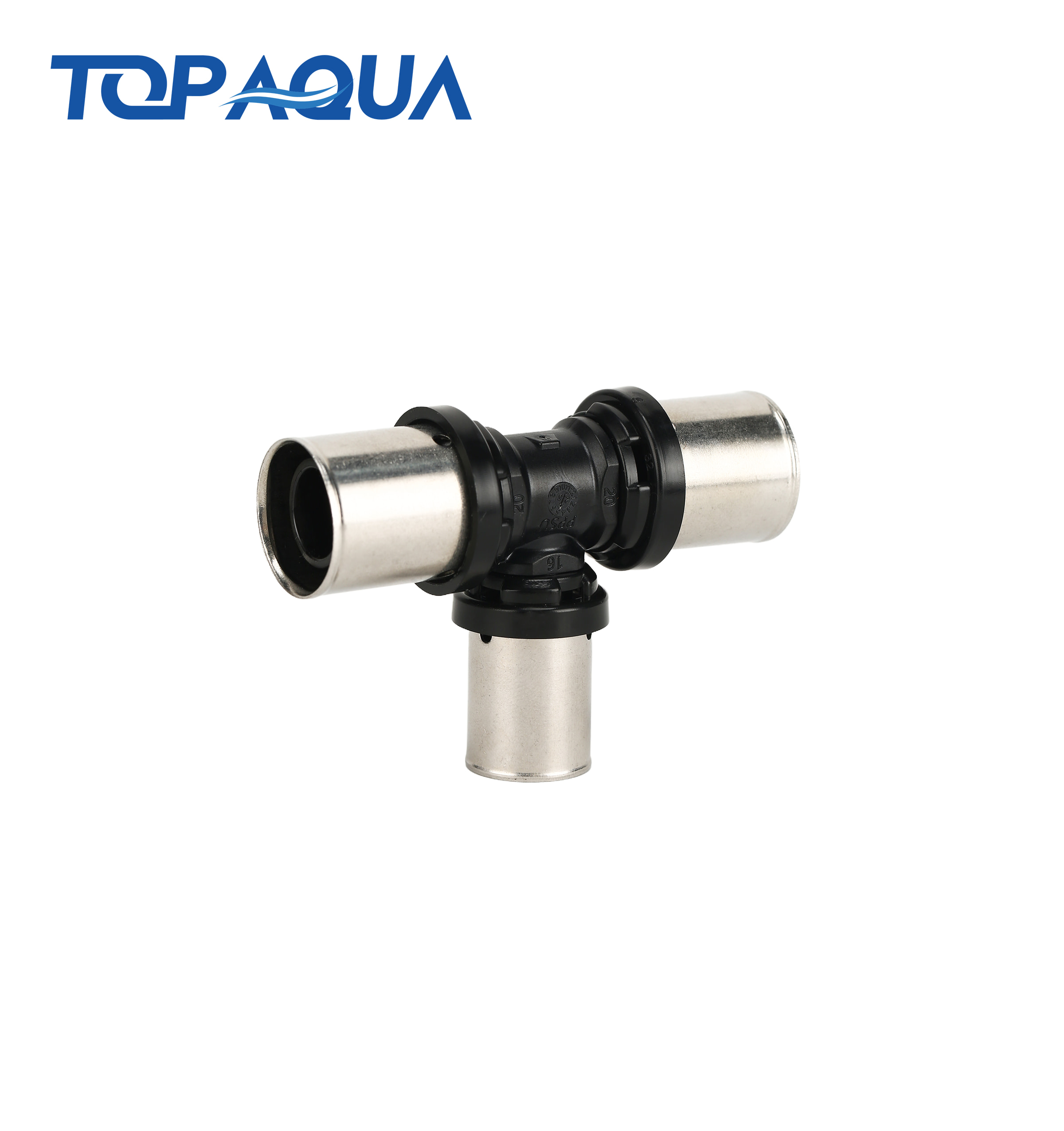
TOP AQUA PPSU Multipress fitting for modern plumbing connections
Why PPSU Fittings Are Considered for Commercial Plumbing Projects
Commercial plumbing systems often serve multiple floors, rooms, tenants, or functional areas. A hotel may require hot and cold water distribution across guest rooms and service facilities, while an office building may need a piping network that supports different water consumption zones. Apartment developments also require repeatable connections and practical installation procedures across many individual units.
In these environments, fitting material and connection design can influence installation quality, maintenance planning, and the long-term performance of the piping network.
PPSU is an engineering thermoplastic known for several properties relevant to plumbing applications:
- Corrosion resistance: Unlike conventional metal fitting bodies, PPSU does not rust in the same way as metal components exposed to water.
- Heat resistance: PPSU has high-temperature capabilities, making it a material option for appropriately designed hot water piping systems.
- Mechanical strength: Its strength and toughness support the structural requirements of plumbing connections when the fitting is correctly designed and installed.
- Hydrolytic stability: PPSU is known for its resistance to degradation in hot water environments.
- Lightweight construction: Thermoplastic fittings can be easier to handle and transport than comparable metal components.
- Drinking water applications: Suitable PPSU grades and finished fitting configurations can be used in potable water systems when the required hygiene and compliance requirements are met.
These characteristics make PPSU worth evaluating for commercial hot and cold water distribution. However, the final selection should always be based on the complete fitting design, applicable technical documentation, and project specifications rather than material properties alone.
For an overview of available connection designs, explore TOP AQUA plumbing fittings and piping products.
Where Can PPSU Fittings Be Used in Commercial Buildings?
PPSU fittings can be considered for compatible hot and cold water distribution systems in a range of commercial building types. The actual application depends on the pipe system, operating conditions, local regulations, and product approvals.
Hotels and hospitality buildings
Hotels typically have extensive water distribution networks serving guest bathrooms, kitchens, laundry facilities, and service areas. A consistent fitting system can help installers manage repeated connections across different floors and building zones. Material selection should account for the operating temperature, pressure, water quality, and maintenance requirements of each system.
Office buildings and commercial complexes
Office developments and mixed-use commercial buildings may contain multiple water supply branches, washrooms, kitchens, and service spaces. Fitting configurations such as elbows, equal tees, reducing tees, and straight unions help connect pipe sections and distribute water through the network.
Apartment and multi-residential developments
Large residential projects often require repeatable installation methods across multiple units. Standardized fitting sizes and compatible connection tools can help contractors organize installation work and manage material procurement more efficiently.
Educational and public facilities
Schools, public buildings, and other institutional facilities may require durable plumbing components for frequently used water supply systems. Buyers should pay particular attention to drinking water hygiene requirements, maintenance access, and the approvals specified by the project.
Commercial renovation projects
When upgrading an existing plumbing network, contractors need to check the dimensions, pipe material, connection method, and installation space before selecting replacement fittings. Compatibility with the existing piping system is especially important when integrating new components into an established installation.
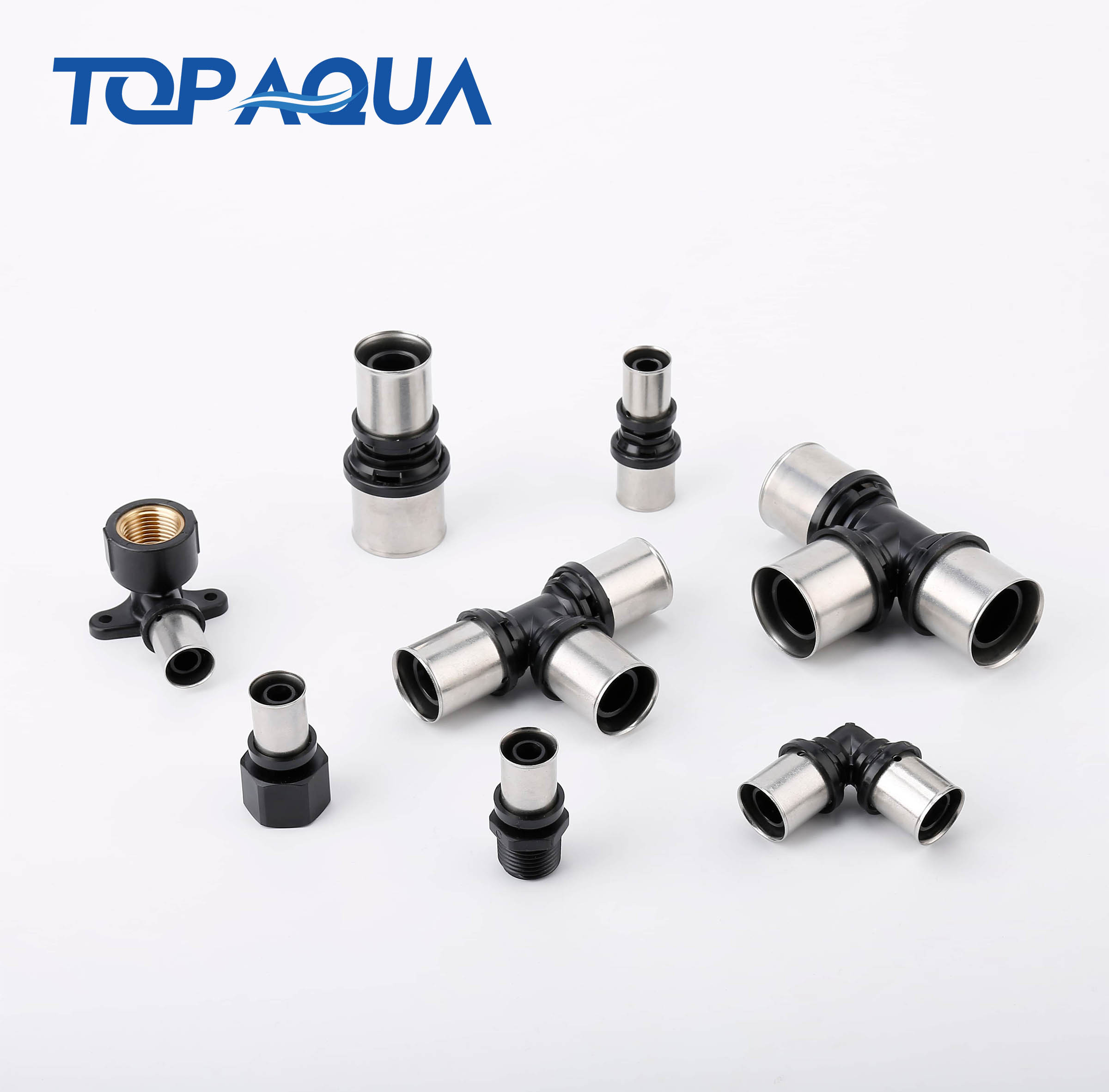
PPSU fitting configurations for different plumbing connection requirements
PPSU Multipress LBP Fittings for Efficient Installation
Press connection technology is widely used in modern plumbing systems because it allows installers to create mechanical connections using compatible pressing tools. For commercial projects, a properly specified press fitting system can support repeatable installation procedures and help reduce the need for flame-based joining methods.
TOP AQUA's PPSU F10 Multipress LBP fittings combine a PPSU fitting body with a press connection design. The product series is compatible with three press profiles: U, TH, and RFz. This multi-profile compatibility can offer installation flexibility for contractors who already use compatible pressing equipment.
One of the key features is the Leak Before Press (LBP) function. This design allows an unpressed connection to indicate leakage during the relevant installation test, helping installers identify certain missed pressing operations before the system is commissioned.
For commercial plumbing contractors, this feature can be useful as an additional installation check. It does not replace correct pipe preparation, proper tool selection, visual inspection, or the pressure testing procedures required by the project.
TOP AQUA's published F10 product specifications include:
- Connection profiles: U, TH, and RFz.
- Maximum working pressure: 10 bar.
- Maximum operating temperature: 180°C, as listed on the product page.
- Connection types: equal elbows, equal tees, equal unions, reducing elbows, reducing tees, and reducing unions.
- Available product dimensions listed in the product range include 16, 18, 20, 25, 26, and 32 mm configurations, depending on fitting type.
These are the manufacturer's published product specifications, not a recommendation to operate every commercial plumbing system at the maximum values. Actual design limits must be checked against the system's continuous operating conditions, applicable standards, pipe specifications, and installation instructions.
Learn more about TOP AQUA PPSU F10 Multipress LBP fittings and their available connection configurations.
PPSU Pull-On Fittings for Alternative Connection Requirements
Not every plumbing project uses the same connection method. Depending on the piping system, contractor preferences, and installation requirements, a pull-on connection may be a suitable alternative to a press connection.
TOP AQUA's PPSU PF2 Pull-On fittings are designed for this type of connection. The product series uses a PPSU fitting body and a PVDF pull-on sleeve. According to the manufacturer, the PVDF sleeve is designed to provide resilient pipe retention and a stable connection after installation.
The PF2 product range includes several common fitting configurations:
- Equal elbows for directional changes in a piping route.
- Equal tees for branching connections with matching pipe dimensions.
- Reducing tees for connecting branches with different dimensions.
- Equal unions for joining compatible pipe sections.
- Reducing unions for connecting different pipe sizes.
For project planners, the key consideration is whether the pull-on connection is compatible with the selected pipe dimensions and system design. Installers should follow the manufacturer's specified preparation and installation procedure rather than treating pull-on fittings as interchangeable with press fittings.
Explore TOP AQUA PPSU PF2 Pull-On fittings for more information about available models and connection configurations.
Choosing the Right PPSU Fitting Configuration for a Commercial Project
A commercial plumbing network contains many different connection points. Selecting the correct fitting configuration helps maintain a practical pipe layout and ensures that branches, changes in direction, and pipe transitions are properly accommodated.
Common PPSU fitting configurations include:
- Equal elbow: Changes the direction of a pipe route while maintaining the same nominal connection size.
- Equal tee: Creates a branch connection where all three connection sizes are the same.
- Reducing tee: Connects a branch pipe with a different nominal dimension from the main pipe.
- Equal straight union: Joins two pipe sections with matching dimensions.
- Reducing union: Connects two pipe sections with different dimensions.
When preparing a bill of materials, project teams should identify each fitting by type, size, and connection method. This is particularly important for buildings with repeated floor layouts, multiple risers, or different pipe dimensions across water distribution branches.
TOP AQUA's F10 and PF2 product pages list different fitting configurations and size combinations. Buyers should use the actual product tables and technical drawings to confirm the required model before ordering.
Pipe Compatibility Is Essential for System Performance
A fitting should never be selected independently of the pipe it connects. Even when two products have similar nominal dimensions, differences in pipe material, wall thickness, outside diameter, and connection design can affect installation compatibility.
For commercial plumbing projects, engineers and contractors should confirm the following before specifying PPSU fittings:
- Pipe material and product series.
- Outside diameter and wall thickness.
- Required fitting connection type.
- Compatible press profile or pull-on installation method.
- Operating pressure and temperature range.
- Applicable system standards and installation instructions.
TOP AQUA also offers multilayer aluminum composite pipes for plumbing and heating applications. Its published pipe range includes PEX/AL/PEX and PERT/AL/PERT constructions, with listed dimensions from 16 mm to 75 mm depending on the pipe type.
For example, the manufacturer's published specifications list a working temperature range of -40°C to 95°C and a working pressure of up to 1.0 MPa for its PEX/AL/PEX and PERT/AL/PERT pipe configurations. These pipe specifications must be assessed separately from the ratings of the selected fittings and the complete system.
Review the TOP AQUA multilayer aluminum composite pipe range when evaluating pipe and fitting combinations for a project.
A PPSU press fitting configuration for multilayer piping systems
Installation Quality and Press Tool Compatibility
Even a well-designed fitting can fail to perform as intended if it is installed incorrectly. In commercial plumbing projects, installation procedures should be consistent across the site, especially when multiple teams or subcontractors are involved.
For PPSU press fittings, installation planning should include:
- Confirming that the pipe dimensions match the fitting specification.
- Cutting the pipe cleanly and preparing the end according to the system instructions.
- Checking that the fitting, sleeve, and sealing components are correctly positioned.
- Selecting the approved pressing tool and compatible jaw profile.
- Completing the pressing operation according to the manufacturer's instructions.
- Inspecting the connection and carrying out the required system pressure test.
TOP AQUA's F10 Multipress LBP fittings are listed as compatible with U, TH, and RFz profiles. However, contractors should still confirm that the specific tool and jaw combination is approved for the selected fitting and pipe size.
Using an incompatible jaw or an incorrect pressing procedure can compromise connection quality. Multi-profile compatibility should therefore be treated as a verified system specification, not as permission to use any available pressing tool.
For project teams reviewing their installation equipment, TOP AQUA also provides a range of pipe press tools for compatible piping applications. Confirm the exact tool and jaw requirements before installation.
Certifications and Technical Documents for Commercial Projects
Commercial construction projects may have specific requirements for drinking water hygiene, material compliance, product performance, and quality documentation. Before approving PPSU fittings, procurement teams should identify which certifications and technical documents are required by the project specification and destination market.
Useful documents to request from a fitting supplier may include:
- Product technical data sheets and dimensional drawings.
- Applicable product certification and official certificate details.
- Drinking water hygiene or material compliance documentation.
- Pressure and temperature performance information.
- Relevant mechanical and connection performance test reports.
- Installation instructions and compatible tool specifications.
- Traceability information for the supplied product batch, where available.
TOP AQUA announced that its PPSU fittings obtained AENOR certification in Spain. Its F10 product page also presents AENOR certification as one of the product's advantages. For a commercial project, buyers should request the current certificate and verify the covered models, product scope, applicable requirements, and validity before relying on the certification for approval.
Certification requirements vary by country and project. A certificate issued for one product series or market should not automatically be assumed to cover every fitting configuration or satisfy all local regulations.
Visit TOP AQUA's certification information to review the company's published certification details.
What Should Contractors Consider When Sourcing PPSU Fittings in Bulk?
Commercial plumbing projects often involve substantial quantities of fittings across multiple floors, buildings, or installation phases. Procurement decisions should therefore consider more than the unit price of each component.
Before placing a bulk order, contractors, distributors, and project purchasing teams should evaluate:
- Product range: Does the supplier provide the required elbows, tees, unions, and reducing configurations?
- Size availability: Are the required pipe dimensions and fitting combinations available?
- System compatibility: Are the fittings suitable for the selected pipe material and connection method?
- Documentation: Can the supplier provide the technical data and certificates required for project approval?
- Quality consistency: Are product specifications and inspection procedures clearly defined?
- Supply planning: Can the supplier confirm production capacity, lead times, packaging, and delivery arrangements for the required order quantity?
- Technical support: Can the supplier help clarify model selection, installation requirements, and product compatibility?
For phased construction projects, it is also useful to coordinate fitting quantities with the installation schedule. This can help reduce material shortages, unnecessary site inventory, and delays caused by missing connection components.
Why Consider TOP AQUA PPSU Fittings for Commercial Plumbing?
TOP AQUA FLOW CONTROL CO., LTD. is a plumbing, heating, and piping system solution provider with product offerings that include PPSU fittings, brass fittings, multilayer pipes, valves, manifolds, and installation tools.
The company provides two PPSU fitting series for different connection requirements:
- PPSU F10 Multipress LBP fittings: A press connection series compatible with U, TH, and RFz profiles, featuring a Leak Before Press function and a range of equal and reducing fitting configurations.
- PPSU PF2 Pull-On fittings: A pull-on connection series using a PPSU fitting body and PVDF sleeve, with elbows, tees, and unions available in different sizes.
TOP AQUA states that it has more than 25 years of experience in the plumbing and piping industry and provides technical support for its product solutions. The company also identifies a dedicated PPSU factory in Huashan Town, Huadu District, Guangzhou, China.
For commercial project buyers, the value of a supplier lies in the combination of product availability, technical documentation, connection compatibility, and communication throughout the procurement process. Reviewing the exact fitting models and project requirements before ordering helps ensure a more suitable product selection.
If you are planning a commercial plumbing project and need PPSU press fittings or pull-on fittings, contact TOP AQUA to discuss your required dimensions, connection types, quantities, and technical documentation.
Frequently Asked Questions About PPSU Fittings for Commercial Plumbing
Are PPSU fittings suitable for commercial plumbing projects?
PPSU fittings can be used in compatible commercial hot and cold water piping systems when the selected product meets the project's pressure, temperature, hygiene, and installation requirements. The exact fitting and pipe system should be verified before specification.
Why are PPSU fittings used in commercial hot and cold water systems?
PPSU offers heat resistance, mechanical strength, corrosion resistance, and hydrolytic stability. These properties make it a material option for plumbing connections where long-term water contact and operating temperature are important considerations.
What is the difference between PPSU press fittings and PPSU Pull-On fittings?
PPSU press fittings use a compatible pressing tool and jaw profile to create the connection. PPSU Pull-On fittings use a pull-on sleeve to secure the pipe. The correct type depends on the piping system, installation method, and manufacturer's specifications.
What does LBP mean in PPSU Multipress LBP fittings?
LBP means Leak Before Press. It is a design feature that allows an unpressed connection to indicate leakage during the relevant installation test, helping installers identify certain missed pressing operations before commissioning.
Which press profiles are compatible with TOP AQUA PPSU F10 fittings?
TOP AQUA lists its F10 PPSU Multipress LBP fittings as compatible with U, TH, and RFz press profiles. Contractors should confirm the approved jaw and tool combination for the specific fitting size before installation.
What are the published pressure and temperature specifications of TOP AQUA PPSU F10 fittings?
TOP AQUA lists a maximum working pressure of 10 bar and a maximum operating temperature of 180°C for its F10 PPSU Multipress LBP fittings. These are published product specifications; actual system design limits must follow the applicable technical documentation and project requirements.
Can PPSU fittings be connected to multilayer pipes?
Compatibility depends on the fitting design, pipe material, dimensions, wall thickness, and connection method. Buyers should confirm that the selected PPSU fitting is approved for the exact multilayer pipe system and installation procedure.
What certifications should be checked for commercial PPSU plumbing fittings?
Certification requirements depend on the destination market and project specification. Buyers may need to review drinking water hygiene approvals, applicable product certifications, and performance test reports. The exact product model and certificate scope should always be verified.
What information should I provide when requesting a PPSU fitting quotation?
Provide the project application, pipe material, outside diameter, wall thickness, required fitting configurations, connection method, estimated quantities, destination market, and required certificates. Technical drawings or existing product references can also help the supplier identify suitable models.
Choosing PPSU fittings for commercial plumbing is a system-level decision. By evaluating material properties, connection technology, pipe compatibility, technical documentation, and installation procedures together, project teams can select fittings that better match the requirements of their building's water distribution system.