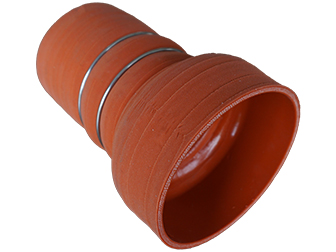
Selecting CAC silicone hoses for heavy-duty trucks involves more than matching dimensions. Inadequate reinforcement, insufficient temperature resistance, or mismatched pressure ratings can lead to premature hose failure, air leaks, and fitment issues. These problems increase replacement costs and complicate sourcing for OEM purchasing teams and parts distributors. For engineers, they can also make it harder to meet application-specific performance and installation requirements.
How should you evaluate reinforcement options for hot-side and cold-side connections? Which temperature and pressure specifications need to be verified? What dimensions and connection details should be confirmed to avoid fitment problems?
This guide explains the operating requirements of heavy-duty truck charge air systems, compares hose reinforcement and material options, and outlines the installation factors and specifications buyers should check before sourcing a replacement.
Key Takeaways
- Heavy-duty truck charge air hoses must withstand temperature variations, boost pressure, and engine vibration.
- Ply count and reinforcement material are separate construction factors that should be evaluated together.
- Incorrect hose dimensions, routing, or clamp placement can cause fitment and sealing problems.
- Replacement selection should account for operating specifications, connection geometry, and the condition of surrounding components.
Charge Air Cooler Hose Applications in Heavy-Duty Trucks
In turbocharged diesel engines, the charge air cooler (CAC) lowers the temperature of compressed air before it enters the engine. Silicone hoses connect the turbocharger, charge air cooler, and intake system while accommodating movement and installation requirements.
These connections are commonly divided into two sections:
Hot-side connections: These carry compressed air from the turbocharger outlet to the charge air cooler. They experience higher air temperatures and may also be exposed to heat from nearby engine components.
Cold-side connections: These carry cooled compressed air from the charge air cooler to the engine intake. Although air temperatures are lower on this side, the connections still operate under boost pressure and are subject to engine vibration and relative movement between connected components.
Operating conditions vary by vehicle application. Long-haul trucks may experience extended periods of sustained engine load, while vocational trucks may undergo more frequent load changes. These differences should be considered when assessing temperature exposure, pressure requirements, and hose durability.
The engine compartment layout determines the required hose length, bend angle, connection dimensions, and clearance. Buyers should identify the exact installation position and vehicle configuration before selecting a replacement hose.
Operating Challenges for Heavy-Duty Truck Charge Air Hoses
Three operating conditions are particularly important when specifying charge air connections.
Temperature Exposure
Hot-side hoses carry air directly from the turbocharger, making temperature resistance a key selection factor. Heat from nearby engine components can add to the thermal load.
Repeated heating and cooling, especially during extended operation, can affect hose durability. Buyers should distinguish between peak temperature and continuous operating temperature when reviewing specifications. The hose’s stated temperature limits should match the actual conditions at its installation point.
Boost Pressure
Charge air pressure changes with engine speed, load, and turbocharger operation. The hose must withstand the system’s specified working pressure without exceeding its rated operating limits.
Ply count alone does not establish pressure capability. Buyers should request verified working-pressure data for the specific hose construction rather than assume that hoses with similar layer counts have equivalent performance.
Engine Vibration and Movement
Engine movement and vibration can place repeated stress on hose ends, bends, and clamped connections. The risk increases when a hose is too short, incorrectly aligned, or forced into position during installation.
A properly sized and routed hose should follow the intended path without excessive tension, twisting, or contact with nearby components.
CAC Silicone Hose Construction for Heavy-Duty Applications
Hose construction affects pressure performance, flexibility, and temperature resistance. Selection should be based on the vehicle’s operating conditions and installation requirements rather than on one construction feature alone.
Reinforcement Layers and Materials
Two factors should be considered when comparing reinforced silicone CAC hoses: the number of reinforcement layers and the reinforcement material.
RAINBOW’s CAC hose is offered in 3-ply and 4-ply versions, and the product highlights an aramid-reinforced construction. Ply count describes how many reinforcement layers the hose wall contains, while aramid describes the fiber used in those layers. These are separate construction characteristics and should be evaluated together.
3-ply version: A three-layer option whose suitability should be assessed against the required temperature, working pressure, and installation conditions.
4-ply version: A four-layer option for applications with specific reinforcement requirements. Buyers should confirm its pressure and temperature ratings for the intended application.
The final pressure capability depends on the complete hose design, including its materials, dimensions, and manufacturing process.
Temperature Capability
RAINBOW lists the aramid-reinforced CAC hose for a working range from -65°F up to 500°F (-54°C to 260°C), with the upper limit stated for continuous operation.
This specification should be considered alongside the actual operating conditions at the installation point. Buyers should also verify the applicable pressure limits for the selected hose construction.
Hose Material and Physical Characteristics
In addition to temperature and reinforcement requirements, buyers should consider the hose’s physical characteristics and operating environment.
The flexibility of silicone CAC hoses allows them to accommodate engine compartment routing and installation requirements that may be difficult to meet with rigid piping. RAINBOW’s silicone CAC hoses feature oil and corrosion resistance. The silicone can also weigh less than certain metal charge pipes, which helps lower the weight of the plumbing in the engine bay.
These characteristics should be evaluated in relation to the intended application, surrounding components, and installation conditions rather than treated as a substitute for checking specific performance ratings.
Common Installation Problems with Heavy-Duty Truck CAC Hoses
Incorrect dimensions or installation can cause problems even when the hose material and construction are suitable.
- Incorrect hose length: A hose that is too short may remain under tension, while excess length can interfere with nearby components.
- Excessive bending or twisting: Forcing the hose beyond its intended routing can create localized stress.
- Incorrect clamp positioning: Clamps placed outside the designated clamping zone may compromise sealing performance.
- Component interference: Repeated contact with brackets, pipes, or other engine components can cause surface abrasion.
- Misaligned connections: Differences in connection angles or positions can place additional stress on hose ends and joints.
During installation, check that the hose aligns with the connected components and sits without excessive tension or twisting. Verify clamp placement and maintain adequate clearance from surrounding parts.
CAC Silicone Hose Inspection and Replacement
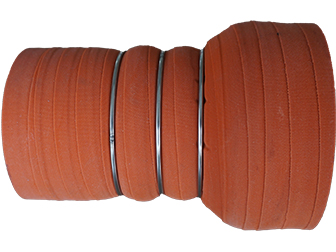
Inspecting charge air connections can help identify damage before it leads to air leakage or unplanned replacement.
Common Signs of Hose Deterioration
Maintenance teams should check for:
- Cracks or splits: Visible damage to the hose surface.
- Swelling or deformation: Changes in shape that may indicate the hose is no longer maintaining its intended structure.
- Abrasion: Worn areas caused by repeated contact with surrounding components.
- Damaged hose ends: Deterioration near connection points that may affect sealing.
- Loose connections: Poorly secured joints that can allow compressed air to escape.
A charge air leak is not necessarily caused by damage to the hose itself. Inspect clamps, fittings, CAC connections, and adjacent ducting to locate the source before replacing the hose.
What to Check Before Ordering a Replacement
Before sourcing a replacement, confirm the following details:
- Inside and outside diameters
- Overall hose length
- Bend angle and connection geometry
- Reinforcement construction and material
- Required temperature and working-pressure ratings
- Clearance and compatibility with surrounding engine components
For fleet maintenance teams and aftermarket parts distributors, verifying these details helps reduce incorrect orders, fitment issues, and repeat replacements.
How to Choose a CAC Silicone Hose for Heavy-Duty Trucks
A suitable replacement should match the vehicle’s operating conditions and physical installation requirements. B2B buyers can use the following checks when evaluating products or preparing sourcing specifications.
Identify the installation position: Confirm whether the hose is installed on the hot side or cold side of the charge air cooler. The position determines the relevant temperature conditions and helps define the required construction.
Confirm temperature and pressure requirements: Check the expected operating temperature and system working pressure. Use the engine or vehicle manufacturer’s specifications as the reference, and distinguish continuous operating limits from short-term temperature exposure.
Compare reinforcement construction: Evaluate 3-ply and 4-ply constructions alongside the reinforcement materials used. Do not select a hose based on layer count alone. Request product-specific pressure and temperature data when comparing configurations.
Verify dimensions and routing: Confirm the inside diameter, outside diameter, overall length, bend angle, and connection arrangement. Check the available installation space to ensure the hose can be fitted without excessive tension, twisting, or interference.
Confirm the required hose configuration: Depending on the engine layout, the application may require straight sections, hump connections, specific inlet or outlet shapes, or custom-molded configurations. If a standard shape cannot meet the dimensional or routing requirements, a custom hose may be more suitable.
For OEM purchasing teams, distributors, and engineering departments, documenting these requirements before requesting quotations makes it easier to compare products and reduce specification mismatches.
RAINBOW Manufacturing offers silicone charge air cooler hoses with customization options for color, shape, dimensions, and reinforcement construction. The minimum order quantity is 10 pieces, with a lead time of 4 to 8 weeks. For heavy-duty truck applications, contact us to discuss your technical requirements. We can review your drawings or samples to determine a suitable hose configuration.
Frequently Asked Questions
How do you inspect a CAC hose for leaks?
Start with a visual inspection of the hose body for cracks, splits, swelling, and abrasion. Check the hose ends, clamps, and connection surfaces for damage or looseness.
If the leak cannot be identified visually, follow the vehicle manufacturer’s specified pressure-testing or leak-detection procedure. Do not exceed the recommended test pressure.
Can a silicone CAC hose be used on both the hot and cold sides?
Yes, if its construction meets the temperature and pressure requirements at the intended installation position. Hot-side and cold-side connections experience different thermal conditions, so the same hose configuration should not automatically be assumed suitable for both.
Does a thicker charge air cooler hose always provide better performance?
No. Wall thickness alone does not determine hose suitability. Reinforcement material, layer arrangement, working pressure, temperature capability, flexibility, and installation geometry all affect performance. The correct construction depends on the requirements of the specific application.