Selecting a suitable fuel cell silicone hose is an important consideration when designing hydrogen-powered vehicles and fuel cell systems. The hose must maintain reliable performance under specific temperature, pressure, and environmental conditions while meeting the material compatibility and cleanliness requirements of the application. For automotive manufacturers, fuel cell system integrators, and industrial equipment suppliers, the right hose selection can help improve system reliability and reduce potential maintenance risks.
However, not every silicone hose is suitable for every fuel cell circuit. Hydrogen supply lines, air intake connections, and coolant circulation systems have different operating requirements. Factors such as inner lining material, reinforcement structure, temperature resistance, pressure capability, and contamination control should all be evaluated before making a purchasing decision.
RAINBOW Manufacturing develops specialized silicone hose solutions for hydrogen-powered fuel cell applications, including thermal management, fuel supply, and air intake systems. This guide explains how to choose a suitable fuel cell silicone hose based on practical engineering requirements and provides useful information for OEM buyers and project engineers.
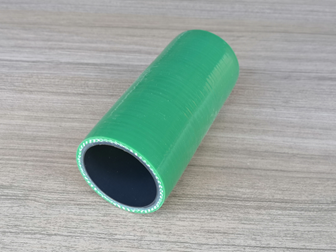
Quick answer: To choose a suitable fuel cell silicone hose, identify the transported medium, operating temperature, working pressure, required hose dimensions, and material compatibility. Then evaluate the lining, reinforcement, cleanliness, flame resistance, and applicable standards. For demanding fuel cell applications, a customized or FKM-lined silicone hose may be considered after technical evaluation.
Identify the Application Within the Fuel Cell System
The first step in selecting a fuel cell silicone hose is understanding where the hose will be installed and what medium it will transport. Fuel cell systems contain different circuits, and each circuit places different demands on the hose material and construction.
Hydrogen supply and anode circuits
The anode side manages hydrogen delivery to the fuel cell stack. Hose selection for hydrogen-related applications requires careful consideration of hydrogen compatibility, permeability, sealing performance, pressure conditions, and system safety requirements. A hose should only be used in direct hydrogen service when its construction has been specifically evaluated for that application.
Air intake and cathode circuits
The cathode side supplies air or oxygen required for the electrochemical reaction. Air management hoses may experience continuous airflow, temperature changes, vibration, and mechanical stress. Low volatile compound content and stable mechanical properties are important when selecting a hose for these conditions.
Coolant circulation circuits
Coolant hoses connect components within the fuel cell thermal management system. Depending on the system design, the transported medium may include distilled water or water-ethylene glycol mixtures. Material compatibility and low extractable levels are particularly important when the coolant must maintain high purity.
For projects requiring application-specific hose configurations, buyers can review RAINBOW's fuel cell silicone hose product category, which includes solutions for anode, cathode, and coolant applications.
Evaluate the Hose Material and Inner Lining
Material selection directly influences the service life and performance of a fuel cell hose. Although silicone rubber provides excellent flexibility and thermal stability, its compatibility with the transported medium must be carefully assessed.
Standard silicone construction may be suitable for certain air management and thermal management applications. However, when the hose is exposed to fuels, oils, or demanding chemical environments, an additional lining may be required to improve media resistance.
FKM-lined silicone hose
FKM, also known as fluororubber, is commonly used in hose constructions requiring enhanced resistance to selected fuels, oils, and chemicals. An FKM inner lining can provide a more suitable fluid-contact surface, while the outer silicone layer helps maintain flexibility and thermal performance.
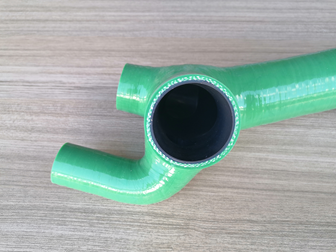
RAINBOW Manufacturing offers fluororubber (VITON) lined silicone hose solutions combining reinforced silicone construction with a chemically resistant inner lining. This design can be considered for fuel cell systems and other demanding fluid transfer applications where enhanced chemical resistance is required.
When choosing an FKM-lined hose, confirm the specific lining formulation, transported medium, temperature range, and pressure requirements with the manufacturer. Material resistance can vary depending on the chemical composition and operating conditions.
Confirm Temperature and Pressure Requirements
Fuel cell systems operate under changing thermal and mechanical conditions. A suitable hose must maintain its flexibility, dimensional stability, and sealing performance throughout the intended operating cycle.
Temperature specifications should distinguish between continuous operating temperature and short-term peak temperature. A hose that withstands a temporary temperature increase may not be suitable for continuous operation at the same level.
RAINBOW's hydrogen fuel cell silicone hose specifications include operating temperatures of up to 200°C continuously and 250°C at peak conditions for certain constructions. The company also specifies operating pressures exceeding 3 bar for applicable hose designs. These figures are product-specific and should be verified against the selected hose configuration.
Before confirming a hose specification, engineers should evaluate:
- Continuous operating temperature
- Maximum short-term temperature
- Normal working pressure
- Maximum pressure and pressure fluctuations
- Pressure cycling during system operation
- Required reinforcement and wall thickness
Reinforced silicone hoses can provide improved structural stability under demanding conditions. However, reinforcement type, hose geometry, and operating pressure should be considered together rather than evaluated independently.
Consider Cleanliness and Low Volatile Compound Content
Fuel cell systems contain sensitive components, including membranes, sensors, and coolant circuits. Unwanted volatile compounds or extractable substances released from hose materials may affect the operating environment of these components.
For this reason, cleanliness is an important factor when selecting a silicone hose for fuel cell applications. Engineers should consider the material formulation, manufacturing process, and potential interaction between the hose and the transported medium.
In coolant circuits using deionized water, the release of extractable substances may increase electrical conductivity. In air management systems, low volatile compound content can help reduce the potential for unwanted interference with sensors and membranes.
RAINBOW develops fuel cell hose materials with controlled volatile compound content and cleanliness characteristics. For OEM projects, buyers should request relevant technical specifications and test reports to confirm whether a proposed hose meets the required cleanliness criteria.
Cleanliness requirements should be defined according to the fuel cell system design. A hose suitable for a conventional coolant circuit may not automatically meet the requirements of a high-purity cooling system.
Review Flame Resistance and Applicable Standards
Flame resistance and compliance requirements are particularly important in hydrogen-powered vehicles, railway applications, and industrial fuel cell systems. The applicable standards depend on the installation environment, customer specifications, and system safety requirements.
Several standards and requirements may be relevant during the selection process:
- UL 94 V-0: A flammability classification used for applicable polymer materials.
- EN 45545: Railway fire protection requirements for railway vehicle materials and components.
- ANSI/CSA HGV 4.2: A standard associated with hydrogen vehicle fuel system components.
- RoHS and REACH: Requirements concerning restricted substances and chemical management.
RAINBOW's fuel cell hose solutions are developed with relevant application requirements in mind, including flame retardancy and low electrical surface resistance. The company identifies ANSI/CSA HGV 4.2-2013, UL 94 V-0, and EN 45545 among the relevant requirements for its fuel cell hose applications.
When reviewing compliance, buyers should verify whether the certification or test report applies to the specific material, hose construction, and finished product. Material-level certification alone may not establish compliance for every assembled hose application.
For applications where flame resistance is a major consideration, buyers can also explore RAINBOW's UL listed flame-resistant silicone hose and request the relevant product documentation.
Select the Correct Dimensions and Reinforcement Structure
Hose dimensions influence flow performance, installation compatibility, and sealing reliability. An incorrect inner diameter may restrict flow or increase pressure losses, while unsuitable outer dimensions can create installation difficulties.
For customized fuel cell hose projects, engineers should confirm the required inner diameter, outer diameter, overall length, wall thickness, bending radius, and connection dimensions.
The reinforcement structure is another important consideration. Depending on the application, silicone hoses may use knitted reinforcement or other reinforcement materials to improve mechanical stability and pressure performance.
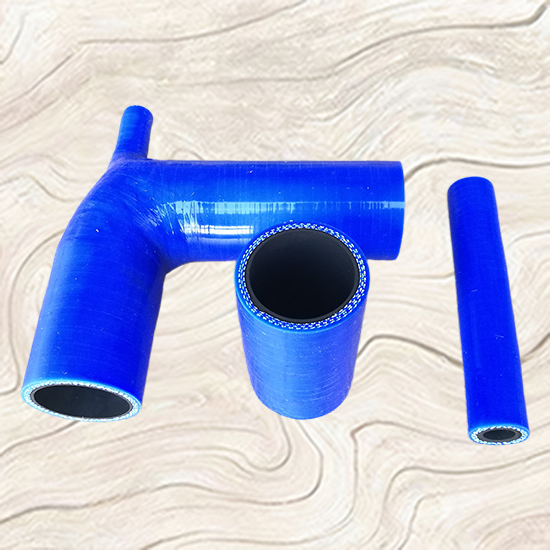
For applications involving tight installation spaces or complex routing, the hose geometry should be reviewed together with the reinforcement design. A suitable configuration can help maintain flexibility while supporting the mechanical requirements of the system.
RAINBOW provides customized silicone hose manufacturing based on customer drawings and application requirements. Sharing technical drawings, dimensional tolerances, and installation details can help the engineering team evaluate the appropriate hose construction.
Choose an Experienced Fuel Cell Silicone Hose Manufacturer
The manufacturer's engineering experience and production capability can influence the quality and reliability of the finished hose. For OEM buyers, it is important to evaluate whether the supplier can support both material selection and customized product development.
When comparing fuel cell hose manufacturers, consider the following capabilities:
- Experience with hydrogen fuel cell applications
- Material compatibility evaluation
- Customized dimensions and hose geometry
- Reinforcement structure development
- Quality control and product testing
- Relevant certification and test documentation
- Prototype development and technical communication
RAINBOW Manufacturing has specialized in performance silicone hoses since 2009 and has developed fuel cell hose solutions for hydrogen-powered vehicles, railway systems, and ships. Its manufacturing capabilities include customized silicone hose designs for demanding automotive and industrial applications.
For projects requiring specific material properties or non-standard dimensions, working directly with a manufacturer can help engineers discuss the technical requirements before mass production.
A reliable supplier should be able to explain the advantages and limitations of the proposed hose design and provide supporting information for application evaluation.
What Information Is Needed for a Fuel Cell Hose Quotation?
Providing complete technical information helps the manufacturer evaluate the application and recommend a suitable hose configuration. A quotation request based only on a product name may not contain enough information for an accurate technical assessment.
| Specification | Details to Provide |
|---|---|
| Application | Hydrogen supply, air management, coolant circulation, or another circuit |
| Transported medium | Hydrogen, air, distilled water, water-ethylene glycol mixture, or other media |
| Temperature | Continuous and peak operating temperature |
| Pressure | Normal working pressure and maximum pressure |
| Dimensions | Inner diameter, outer diameter, length, and bending radius |
| Material | Silicone compound, FKM lining, or other required material |
| Reinforcement | Required reinforcement type and structure |
| Compliance | Required standards, test reports, and customer specifications |
| Order details | Prototype quantity, annual demand, and target delivery schedule |
With these details, the manufacturer can better assess whether a standard hose configuration is suitable or whether a customized design is required.
FAQ About Fuel Cell Silicone Hose
What is a fuel cell silicone hose?
A fuel cell silicone hose is a specialized hose used in selected gas, air, or coolant circuits within fuel cell systems. Its material, lining, reinforcement, and dimensions are selected according to the application requirements.
Can standard silicone hose be used in hydrogen fuel cell systems?
Standard silicone hose may be suitable for certain air management or coolant applications. However, direct hydrogen service requires specific evaluation of material compatibility, permeability, pressure resistance, sealing performance, and system safety.
Why is FKM lining used in fuel cell silicone hoses?
FKM lining can provide enhanced resistance to selected fuels, oils, and chemicals. When combined with a silicone outer layer, it can offer a balance of chemical resistance and flexibility for demanding applications.
What temperature can a fuel cell silicone hose withstand?
The temperature capability depends on the material formulation and hose construction. Certain RAINBOW fuel cell hose designs are specified for continuous temperatures up to 200°C and peak temperatures up to 250°C. The applicable product specification should always be verified.
How do I choose the correct fuel cell hose diameter?
The correct diameter should be selected according to flow requirements, pressure losses, connection dimensions, and installation space. Inner diameter, outer diameter, wall thickness, and bending radius should be confirmed before production.
Can RAINBOW provide customized fuel cell silicone hoses?
RAINBOW Manufacturing provides customized silicone hose solutions based on application requirements, including dimensions, material construction, reinforcement, and hose geometry. Technical drawings and operating specifications can be submitted for evaluation.
What information should be included in a fuel cell hose inquiry?
A fuel cell hose inquiry should include the application, transported medium, operating temperature, working pressure, dimensions, material requirements, applicable standards, and estimated order quantity.
Find a Suitable Fuel Cell Silicone Hose for Your Application
Choosing a suitable fuel cell silicone hose requires a clear understanding of the operating environment and the technical requirements of the system. Material compatibility, temperature resistance, pressure capability, cleanliness, reinforcement, and compliance should all be considered during the selection process.
For hydrogen-powered vehicles, railway systems, marine equipment, and industrial fuel cell applications, the most effective approach is to define the hose requirements before finalizing the design. This helps engineers identify an appropriate construction and reduce the risk of material or installation issues.
RAINBOW Manufacturing develops specialized silicone hose solutions for fuel cell systems, including customized hose constructions and FKM-lined options. Our team can help evaluate your application requirements and discuss suitable hose designs.
Looking for a fuel cell silicone hose manufacturer? Contact RAINBOW Manufacturing with your technical drawings, operating parameters, and project requirements to discuss a suitable solution for your fuel cell system.