In modern plumbing and heating installations, a small installation mistake can lead to costly water leaks, system failures, and time-consuming repairs. One common issue is an unpressed pipe connection, which may go unnoticed when installers work with a large number of press fittings across a project. This is where Leak Before Press (LBP) technology makes a practical difference.
What is Leak Before Press, and how does it help prevent installation errors? LBP is a safety-oriented design feature in press fittings that allows an unpressed connection to reveal leakage during the appropriate pressure test. Instead of allowing a missed pressing operation to remain unnoticed, the fitting provides a visible indication that the connection needs attention.
For plumbing contractors, distributors, and piping system manufacturers, TOP AQUA provides PPSU and brass Multipress LBP fittings designed to improve installation reliability and support efficient pipe connection systems.
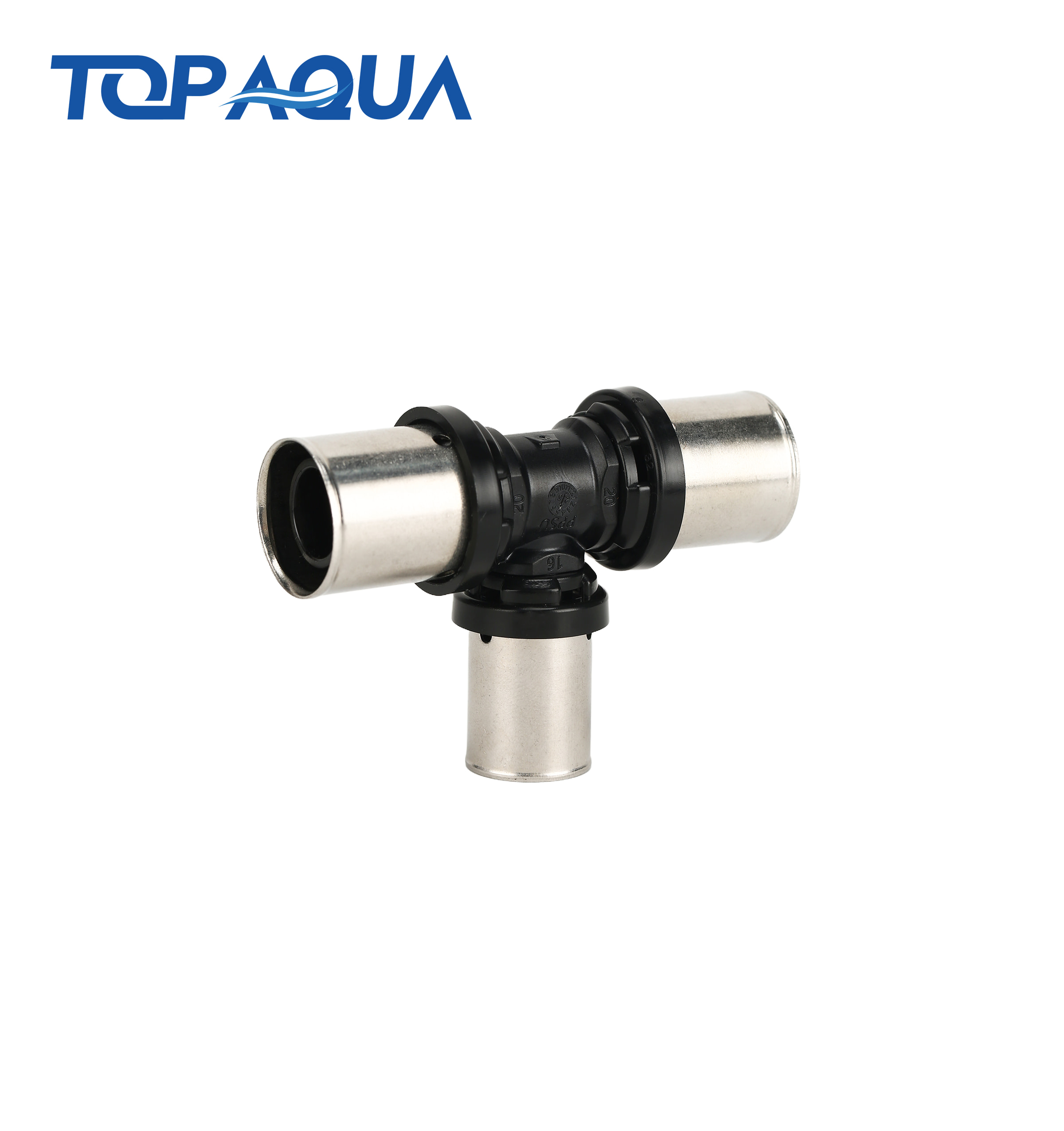
What Is Leak Before Press Technology?
Leak Before Press, commonly abbreviated as LBP, is a leakage indication feature integrated into specially designed press fittings. Its main purpose is to help installers identify connections that have not been properly pressed before a plumbing system is put into service.
In a conventional press connection, a pressing tool compresses the stainless steel sleeve around the pipe and fitting assembly. This compression creates the mechanical connection and allows the sealing components to achieve the required sealing performance.
However, if an installer accidentally skips a pressing operation, the unpressed connection may not be immediately noticeable during visual inspection. Depending on the fitting design, it could remain undetected until the system is tested or starts operating.
LBP fittings address this risk through a specially designed sealing structure. When the connection remains unpressed, the fitting allows water or test medium to escape through a designated leakage path during the applicable pressure test. This visible leakage alerts the installation team to the missed connection.
Once the fitting is correctly pressed using the specified tool and profile, the connection is designed to achieve its intended sealing performance.
In simple terms, Leak Before Press fittings are designed to leak when a connection has not been pressed, helping installers identify missed pressing operations before commissioning.
How Do LBP Press Fittings Prevent Installation Errors?
The main advantage of LBP technology is that it turns a potentially hidden installation mistake into a visible warning during pressure testing. This is particularly useful on projects involving multiple pipe connections, where manually checking every joint can be difficult.
The working principle can be understood through the following process:
Unpressed connection: The pipe is inserted into the fitting, but the installer has not completed the pressing operation. The specially designed sealing structure maintains a leakage path.
Pressure testing: When the piping system undergoes the appropriate pressure test, water escapes from the unpressed connection through the designed leakage path.
Visual identification: Installers can identify the affected joint by observing the leakage and locate the connection that requires further work.
Corrective pressing: The installer checks the pipe insertion, fitting position, and tool compatibility before completing the pressing operation according to the manufacturer's instructions.
Final inspection: The connection is checked again as part of the required system pressure and leak testing procedure.
This process helps reduce the possibility of an unpressed connection being overlooked before pipes are concealed behind walls, ceilings, or other building structures.
Common Installation Errors That LBP Technology Helps Identify
Even experienced plumbing installers can make mistakes when working under tight construction schedules. LBP technology provides an additional opportunity to detect certain pressing-related errors before the piping system is put into operation.
Missed pressing operations
Forgetting to press a fitting is one of the most obvious risks in press-fit installation. This can happen when installers move between different work areas or complete a large number of connections in a short period. LBP technology helps identify these unpressed joints during pressure testing.
Overlooked connections in complex piping layouts
Large plumbing and heating projects often involve numerous elbows, tees, straight unions, and branch connections. When several installers work on the same system, tracking every completed connection becomes more challenging. A leakage indication feature provides an additional inspection reference.
Insufficient final inspection
Visual inspection alone may not reliably confirm whether every connection has been pressed. Combining LBP fittings with a properly conducted pressure test provides an additional way to identify missed pressing operations.
Installation quality control challenges
For contractors managing multiple installation teams, consistent quality control is essential. LBP technology helps make certain installation errors easier to identify and correct before the project moves to the next construction stage.
It is important to understand that LBP is not a replacement for correct installation procedures, compatible pressing tools, or final pressure testing. It is an additional installation safety feature that supports a more reliable inspection process.
PPSU and Brass LBP Press Fittings from TOP AQUA
TOP AQUA offers Multipress LBP fitting solutions in both PPSU and brass materials. These product series are developed for different piping requirements while incorporating the same core principle of leakage indication before pressing.
For buyers selecting LBP plumbing fittings, the choice between PPSU and brass should be based on the application, operating conditions, connection requirements, and project specifications.
PPSU F10 Multipress LBP Fittings
TOP AQUA PPSU F10 Multipress LBP fittings combine a PPSU fitting body with a multi-profile press connection design. PPSU is a high-performance engineering thermoplastic known for its mechanical strength, heat resistance, and hydrolytic stability.
The series supports three pressing profiles: U, TH, and RFz. This compatibility gives contractors additional flexibility when selecting suitable pressing equipment, provided that the exact tool and jaw specifications are approved for the fitting system.
The product range includes equal elbows, unequal elbows, equal tees, unequal tees, and straight unions in different sizes, making it suitable for various multilayer pipe connection configurations.
Key product information includes:
- Fitting body material: PPSU
- Press profiles: U, TH, and RFz
- Integrated Leak Before Press function
- AENOR certification stated on the product page
- Maximum working pressure: 10 bar
- Published maximum operating temperature: 180°C
Operating limits should always be checked against the applicable technical documentation and actual system conditions before specification.
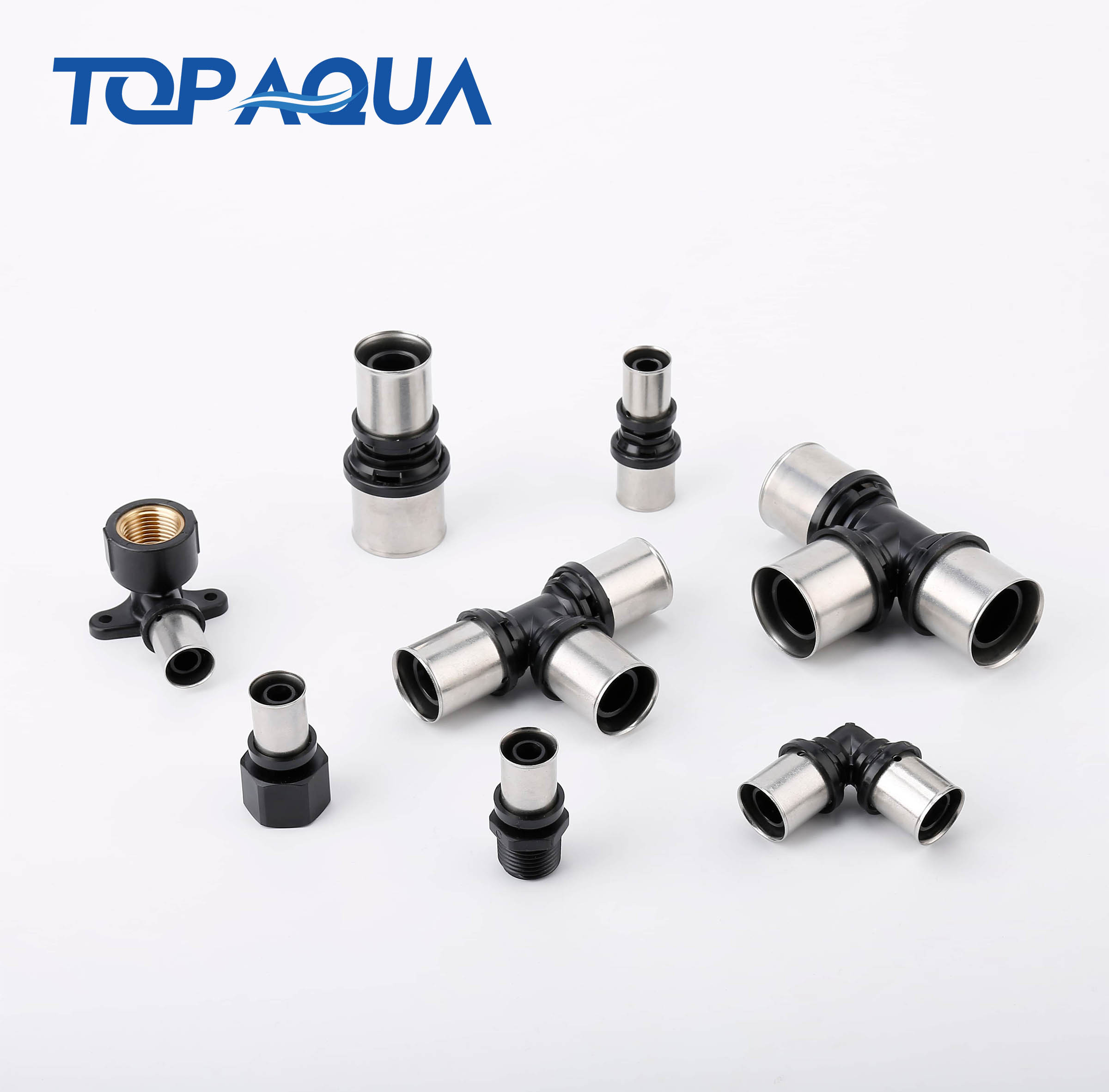
For projects requiring a lightweight, corrosion-resistant thermoplastic connection solution, explore TOP AQUA PPSU F10 Multipress LBP Fittings for product configurations and technical specifications.
Brass F10 Multipress LBP Fittings
For projects where metal fittings are preferred, TOP AQUA also provides Brass F10 Multipress LBP fittings. This series features a brass alloy body and SUS 304 stainless steel press sleeve, combining a durable metal construction with a leakage indication function.
The brass Multipress system is designed for hot and cold potable water distribution, heating installations, and selected industrial applications. It supports U, TH, and RFz pressing profiles for compatible multilayer pipe connections.
Its product range includes male and female elbows, male and female tees, equal and unequal unions, and other connection configurations.
Key product information includes:
- Fitting body material: CW617N, CW602N, or CW511 brass, depending on the model
- Press sleeve: SUS 304 stainless steel
- Sealing components: Two EPDM O-rings
- Press profiles: U, TH, and RFz
- Integrated leakage indication function
- Maximum working pressure: 10 bar
- Maximum operating temperature: 95°C
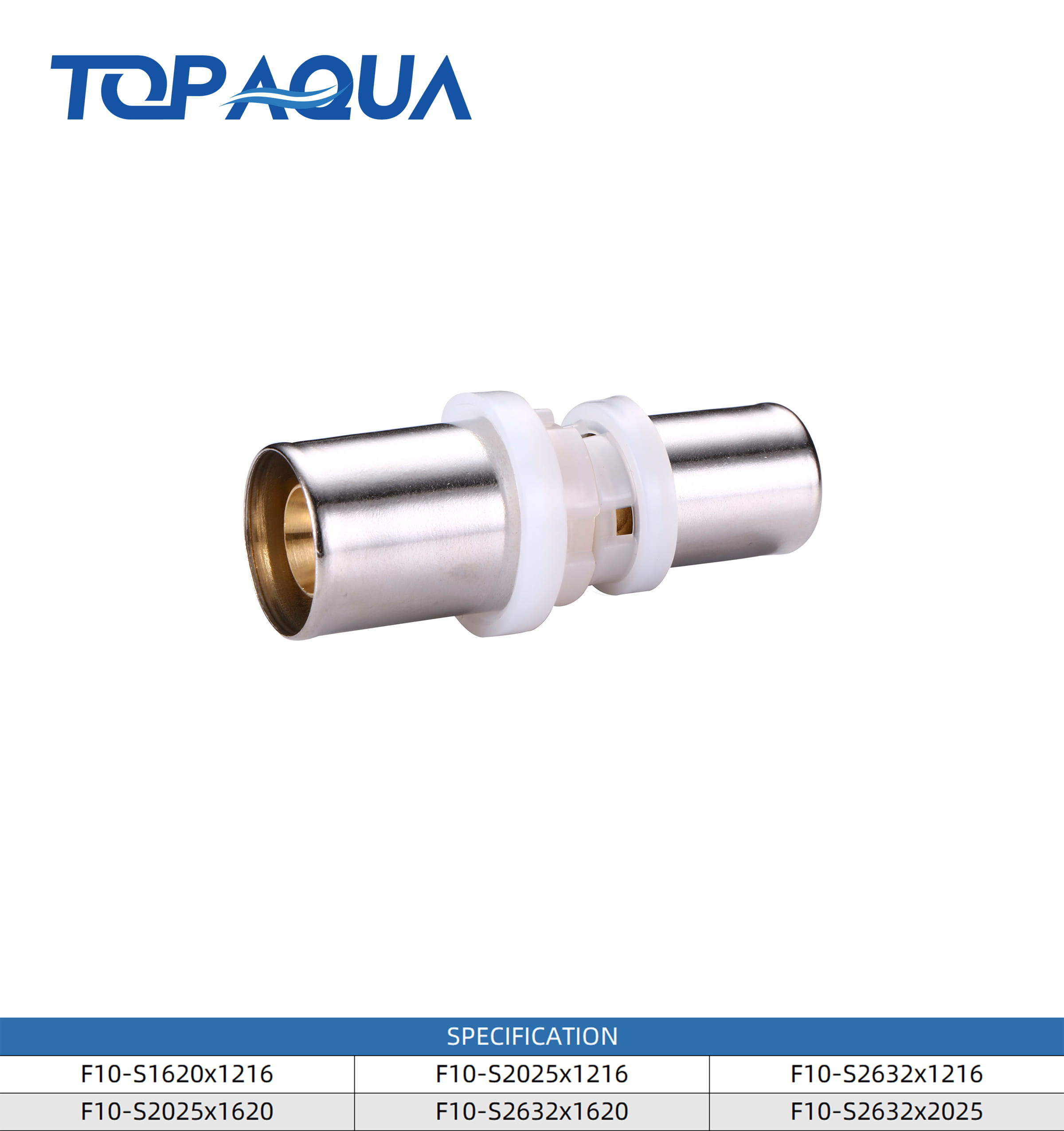
These features make the series a practical option for projects requiring brass press connections with additional installation error detection. View TOP AQUA Brass F10 Multipress LBP Fittings to explore available configurations and specifications.
PPSU vs. Brass LBP Press Fittings: Which Should You Choose?
Both PPSU and brass Multipress LBP fittings offer leakage indication during the relevant installation test. However, their material properties and application considerations are different.
| Comparison | PPSU LBP Fittings | Brass LBP Fittings |
|---|---|---|
| Main material | PPSU | Brass alloy |
| Press profiles | U / TH / RFz | U / TH / RFz |
| Leak indication | Yes | Yes |
| Press sleeve | Stainless steel | SUS 304 stainless steel |
| Published maximum working pressure | 10 bar | 10 bar |
| Published maximum operating temperature | 180°C | 95°C |
For projects prioritizing lightweight construction and corrosion resistance, PPSU may be worth considering. For installations requiring a metal fitting body, brass can be a more suitable choice.
However, material selection should never be based on a single specification. Buyers should evaluate water quality, operating temperature, pressure requirements, pipe material, local regulations, and compatibility with the complete piping system.
Where Are Leak Before Press Fittings Used?
LBP press fittings are particularly useful in plumbing and heating projects where a large number of mechanical connections must be installed and inspected.
Residential plumbing systems: Residential hot and cold water distribution systems often contain multiple pipe branches and connection points. LBP technology provides an additional way to identify missed pressing operations before pipes are concealed.
Commercial buildings: Hotels, offices, shopping centers, and other commercial buildings typically require extensive piping networks. Reducing installation errors can help contractors improve inspection efficiency and avoid unnecessary repair work.
Heating systems: Press fittings are widely used in compatible heating distribution systems. Selecting suitable LBP fittings can help installers identify certain incomplete connections during the required testing process.
Multilayer piping installations: Multilayer pipes are commonly used in modern plumbing and heating applications. When paired with compatible press fittings, they provide a mechanical connection solution that can be installed without flame-based joining methods.
For projects using multilayer piping, TOP AQUA also offers Multilayer Aluminum Composite Pipes designed for piping system applications. Pipe and fitting compatibility should be confirmed before installation.
Installation Tips for Reliable LBP Press Connections
Although LBP technology helps identify certain installation errors, the overall quality of a press connection still depends on correct installation procedures. Contractors should follow the fitting manufacturer's instructions throughout the process.
- Check pipe compatibility: Confirm that the pipe material, outside diameter, wall thickness, and fitting specifications are suitable for the selected connection system.
- Prepare the pipe correctly: Cut the pipe cleanly and prepare its end according to the manufacturer's requirements. Remove burrs where required.
- Check insertion depth: Insert the pipe fully into the fitting and verify the required insertion position before pressing.
- Use compatible pressing tools: Select the correct pressing tool and jaw profile. U, TH, and RFz profiles should not be treated as interchangeable unless the manufacturer explicitly confirms compatibility.
- Complete every pressing operation: Follow the specified pressing sequence and ensure that each connection is processed correctly.
- Conduct pressure testing: Test the completed system according to the applicable installation standards and manufacturer's instructions. Investigate any leakage before commissioning.
For professional installers, having the correct equipment is just as important as selecting the right fittings. TOP AQUA also provides Press Tools to support press-fitting installation requirements. Always verify the tool and jaw compatibility for the specific fitting model.
Why Choose TOP AQUA for LBP Plumbing Fittings?
Choosing a press fitting supplier involves more than comparing product prices. For distributors, wholesalers, contractors, and OEM partners, product consistency, technical specifications, manufacturing capabilities, and communication are all important considerations.
TOP AQUA FLOW CONTROL CO., LTD. provides plumbing, heating, and piping system solutions, with a product portfolio covering PPSU fittings, brass fittings, multilayer pipes, valves, manifolds, and installation tools.
Its Multipress LBP product range offers several practical advantages:
- Multiple material options: PPSU and brass fitting series for different project requirements.
- Multi-profile compatibility: U, TH, and RFz press profiles for compatible systems.
- Leakage indication: LBP technology helps identify unpressed connections during the applicable pressure test.
- Multiple connection configurations: Elbows, tees, unions, and other fitting types for different piping layouts.
- Technical support: Product information and assistance for distributors and project buyers.
With more than 26 years of experience in the plumbing and piping industry, TOP AQUA focuses on developing practical connection solutions for global customers. Its product range is designed to support different water distribution and heating system requirements.
Whether you are sourcing PPSU LBP fittings, brass press fittings, or complete multilayer piping solutions, selecting a supplier with clear product specifications and technical support can help make procurement and project coordination more efficient.
To discuss product specifications, available sizes, OEM requirements, or bulk purchasing, visit TOP AQUA Contact Us and share your project requirements with the team.
Frequently Asked Questions About Leak Before Press Fittings
What does LBP mean in plumbing fittings?
LBP stands for Leak Before Press. It is a feature in specially designed press fittings that allows an unpressed connection to leak during the appropriate pressure test, helping installers identify missed pressing operations.
How do Leak Before Press fittings work?
LBP fittings use a specially designed sealing structure that creates a leakage path when the connection has not been pressed. During pressure testing, water escapes through this path, providing a visible indication that the joint needs to be checked and correctly pressed.
Do LBP fittings prevent all plumbing leaks?
No. LBP technology helps identify certain unpressed connections, but it does not prevent every possible leak. Incorrect pipe preparation, damaged sealing components, incompatible tools, improper installation, and unsuitable operating conditions can still cause leakage.
What is the difference between PPSU and brass LBP fittings?
PPSU LBP fittings use an engineering thermoplastic fitting body, while brass LBP fittings use a metal fitting body. Both TOP AQUA F10 Multipress series support U, TH, and RFz press profiles and feature leakage indication. The appropriate material depends on project requirements and operating conditions.
Are TOP AQUA LBP press fittings compatible with U, TH, and RFz profiles?
Yes. TOP AQUA PPSU F10 and Brass F10 Multipress LBP fittings are specified for U, TH, and RFz press profiles. Installers should still verify the exact tool, jaw dimensions, and fitting model before use.
Can LBP fittings be used for hot and cold water systems?
Yes. TOP AQUA's PPSU and brass Multipress LBP fittings are developed for compatible plumbing and water distribution applications. The applicable pressure and temperature limits differ by product series and must be checked before installation.
Are LBP fittings suitable for commercial plumbing projects?
They can be a practical option for commercial plumbing projects involving numerous press connections. The leakage indication feature helps installation teams identify certain missed pressing operations during testing, supporting project quality control.
Do LBP fittings still require pressure testing?
Yes. LBP technology is an additional installation inspection feature, not a replacement for pressure testing. The completed piping system must still undergo the testing procedures required by the applicable standards and manufacturer's instructions.