
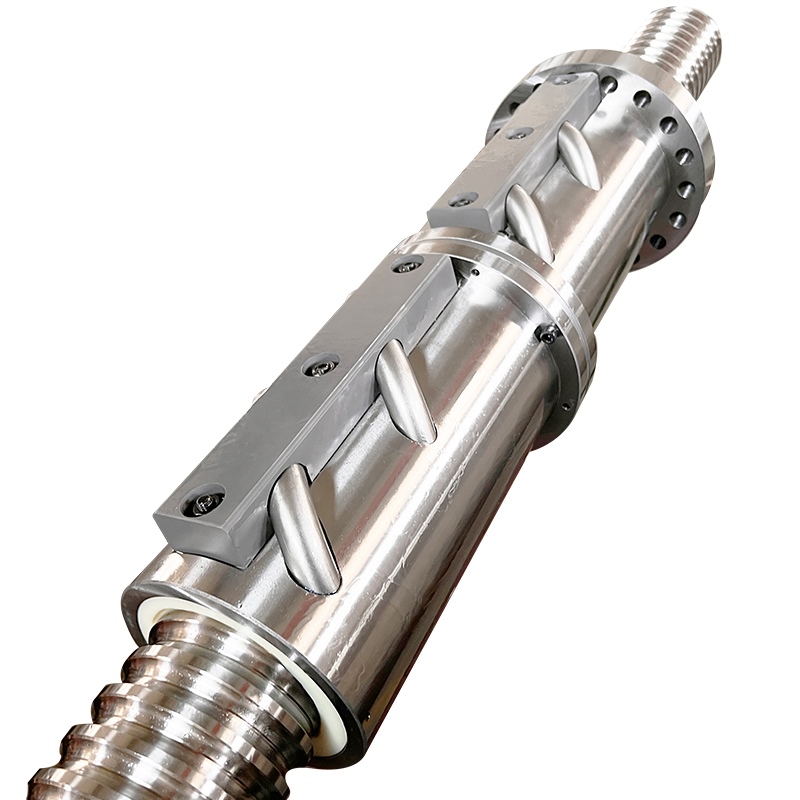
As a key transmission component for converting rotary to linear motion, ball screws have become the "heart" of high-end equipment such as precision instruments, CNC machine tools, and automated equipment, directly determining the operating accuracy and stability of the equipment, thanks to their three core advantages: "high precision, high efficiency, and high rigidity".
Eight Key Points for Daily Maintenance
- Cleaning and Protection: Regularly clean the lead screw surface with a brush or compressed air to remove dust and chips, preventing impurities from entering the raceway; in harsh environments, install dust covers and protective sleeves.
- Scientific Lubrication: Select lubricant according to operating conditions, and replenish/change oil regularly according to operating time to ensure uniform lubrication of the raceway.
- Load Control: Strictly adhere to rated load requirements, avoiding instantaneous overload or impact loads to prevent lead screw deformation.
- Precise Installation: Ensure the lead screw is parallel and coaxial with the guide rail during installation, and tighten the bearings.
- Environmental Adaptability: Keep away from high temperature, high humidity, and corrosive environments. Take heat insulation, moisture-proof, and anti-corrosion measures when necessary.
- Regular Inspection: Establish an operation log, record changes in noise, temperature, and accuracy, and stop the machine for repair immediately if any abnormalities are found.
- Maintenance During Idle Time: When not in use for a long time, apply anti-rust oil and cover with a protective cover to prevent rust and dust accumulation.
- Synchronous Maintenance: Simultaneously check mating components (bearings, guide rails, drive motor) to ensure the stable and coordinated operation of the entire transmission system.
Prevention and Inspection Techniques
- Visual Inspection: Inspect the lead screw surface for scratches, rust, and dents; check for intact and undamaged threads.
- Lubrication Check: Observe the even distribution of lubricant. If the color turns black or the viscosity decreases, replace it immediately.
- Smoothness Test: Manually rotate the lead screw or run it under no-load to check for any jamming or uneven resistance.
- Noise Identification: Listen for abnormal friction or impact sounds during operation, paying particular attention to the bearing area.
- Accuracy Inspection: Use a dial indicator and laser interferometer to check the positioning accuracy and repeatability, comparing them with standard values to determine if the accuracy is satisfactory. Exceeding limits;
- Clearance Measurement: Use a feeler gauge or dial indicator to check the clearance between the lead screw and nut. If it exceeds the limit, the component needs to be replaced;
- Connection Tightness: Check the bolts of the bearing housing, coupling, and nut housing to prevent loosening that could cause vibration;
- Temperature Monitoring: Use a thermometer to check the temperature of the bearing and lead screw body after operation. If it exceeds 60℃, lubrication or installation problems need to be investigated;
- Cleanliness Assessment: Check for chips and oil accumulation around the lead screw and clean them promptly;
- Thread Flaw Detection: For lead screws in critical operating conditions, use magnetic particle testing or penetrant testing to check for hidden thread damage.