头部背景图片

High-Efficiency Circulation Pumps for the Future of Heating and Water Systems

2025-09-02

In today’s energy-conscious world, where efficiency defines industry standards, every component in a heating and circulation system has a direct impact on performance, operating costs, and sustainability. Shinhoo Mega Series high efficiency circulator pump is designed to set new benchmarks in reliability, intelligence, and energy savings—delivering all-in-one solutions for residential, commercial, and industrial applications.


Designed for Extreme Efficiency

At the core of Mega Series lies the integration of advanced motor technology with intelligent adaptive control. Out of the box, the pump operates in automatic mode, using self-learning algorithms to adjust its performance to real-time system demand. By leveraging low-voltage PWM (Pulse Width Modulation) signals or 0–10V inputs, Mega Series circulation pumps seamlessly adapt to varying flow requirements across different systems. This results in revolutionary energy savings—reducing power consumption by up to 70% compared to conventional pumps.


Smart Adaptive Control

Full Compatibility: Accepts both PWM and 0–10V control signals.

Multi-Speed Integration: Flexible response to changing system loads.

Real-Time Adjustment: Always tuned to optimal performance with no manual intervention.


Safety and Reliability, 24/7

Mega Series is engineered with multi-level protection systems, including over-voltage, under-voltage, and light-load safeguards. This ensures uninterrupted operation and extended service life—even under extreme working conditions. With H-class all-copper windings rated up to 180°C, and zero-leakage sealing, the pump guarantees long-term stability with no compromise on safety.


Whisper-Quiet Comfort

With a noise level as low as 42 dB(A), Mega Series creates a library-level quiet environment, enhancing comfort in domestic settings while ensuring reliability in commercial and industrial applications.


Applications Across All Scenarios

Central heating circulating pump for residential comfort.

Domestic water pump for reliable hot water supply.

Circulation pump heating in commercial HVAC systems.

Industrial process cooling and circulation systems.

Renewable energy setups, including solar heating systems.

From home heating to industrial cooling, the Mega Series provides unmatched flexibility. With a maximum flow rate of 11 m³/h and a design life of 10 years, it delivers stable, eco-friendly performance that users can trust for the long term.


Redefining Circulator Pump Standards

Shinhoo Mega Series is not just another water pump—it is a leap forward in pump technology. By combining energy efficiency, smart adaptability, ultra-quiet operation, and long-lasting durability, the Mega Series offers the ultimate solution for modern heating, cooling, and domestic water systems.

How to Choose the Right Circulator Pump for Your Home

2025-09-02

When homeowners search online for the best household circulator pump, the questions are often the same:

Which pump is most energy-efficient?

Which pump is quiet enough for my home?

Which circulator pump is durable and low-maintenance?

Which pump works for heating, hot water, and solar systems?

The answers are crucial, because choosing the right hot water pump or underfloor heating pump can make a big difference in both comfort and energy savings.


If you’re considering a circulator pump for floor heating, radiators, domestic hot water recirculation, solar thermal systems, or heat pump circulation, Shinhoo Master SD Series is designed to meet all these needs.

1. Energy Efficiency –Which circulator pump saves the most electricity?

For most households, energy consumption is a top concern. Master SD Series circulator pump features a permanent magnet synchronous motor with EEI ≤ 0.20, exceeding Europe’s strict A-class energy efficiency standard. This means:

Lower household electricity bills.

A smaller carbon footprint.

Better long-term system performance.

For anyone searching for an energy-saving hot water circulation pump, this is a standout solution.

2. Quiet Operation –Is the pump noisy?

Noise is a common complaint in older heating and hot water systems. Shinhoo Master SD runs at less than 42 dB, quieter than a normal conversation. Whether used as a domestic hot water pump or an underfloor heating circulator pump, it ensures a peaceful, comfortable home environment.

3. Durability –Will the pump last in my system?

A reliable pump should withstand demanding conditions, especially in areas with hard or corrosive water. The Master SD ensures durability through:

All-copper motor winding with H-class insulation (up to 180°C).

Pump bodies available in corrosion-resistant engineering plastic.

2000-hour salt spray testing and 5000-cycle endurance testing.

This makes it one of the most reliable circulation pumps for heating and hot water systems.

4. Smart Control –Is it easy to use and integrate?

Homeowners and installers alike want pumps that are simple to set up and smart in operation. Master SD household circulator pump supports:

PWM signal input and multiple operation modes (CS/CP/PP).

Real-time flow and power display for easy monitoring.

Automatic air venting and anti-blocking functions, reducing downtime.

This makes it one of the best options for a smart circulation pump for domestic heating and hot water systems.

5. Versatility –Can one pump handle heating and cooling?

Master SD Series is designed for dual application: both heating and cooling. Its anti-condensation structure prevents moisture damage, ensuring safe use in humid conditions. Whether as a heat pump circulation pump in summer or a radiator pump in winter, it works reliably all year round.


Why Shinhoo Master SD Series is a Smart Choice?

If you’re searching for a pump that is:

Energy-efficient circulator pump (lower bills, eco-friendly).

Quiet domestic hot water pump (comfort at home).

Durable and corrosion-resistant (long service life).

Smart heating circulator pump (easy to control and integrate).

Versatile hot and cold water pump (heating, solar, and heat pump compatible).


Shinhoo Master SD Series delivers on all fronts.

When choosing a household circulator pump, focus on the essentials:

Energy efficiency

Noise levels

Durability

Smart control

System compatibility


Shinhoo Master SD Series combines all these advantages, making it an ideal choice for domestic hot water circulation, underfloor heating systems, radiator heating, solar circulation systems, and heat pump applications.

By investing in a pump that is efficient, quiet, durable, and smart, homeowners can enjoy greater comfort, lower costs, and long-term peace of mind.

Key Parameters for Selecting High and Low Temperature Servo Motors

2025-08-29

The selection of high and low temperature servo motors requires focusing on the following core parameters:

Performance Parameters

1、Torque and Speed

Clarify the torque attenuation rate under extreme temperatures (e.g., torque reduction ≤10% at 120℃).

The speed adjustment range must meet low-temperature anti-slip requirements (e.g., polar equipment requires low-speed high torque).

2、Dynamic Response

The inertia ratio is recommended to be ≤10:1 (load inertia to rotor inertia ratio) to ensure rapid response during low-temperature startup.

Acceleration requirements (e.g., semiconductor manipulators require acceleration from 0 to 3000 rpm in <30 ms).

3、Precision Requirements

Positioning accuracy must account for thermal expansion effects (e.g., ±0.001 mm requires thermal compensation algorithms).

Encoder type selection: Use resolvers for low temperatures (anti-condensation) and optical encoders for high temperatures (temperature resistance ≥120℃).

4、Environment and Cost

Temperature Range: Specify stable operation requirements, e.g., from a minimum of -40℃ to a maximum of 120℃.

Initial Cost: Imported brands (e.g., Siemens, Yaskawa) are 30%~50% more expensive than domestic brands.

Maintenance Cost: Long-life designs can reduce replacement frequency (e.g., SYD series maintenance cycle of 20,000 hours).

5、Installation and Debugging

Load Inertia: Must be converted to the full load inertia on the motor shaft to avoid system adjustment difficulties.

Simulation Services: Suppliers should provide thermal simulation or dynamic load analysis reports.

6、Special Requirements

Brake Configuration: Brakes must be equipped to ensure safe stopping when there is a tendency for rotation.

Urgent Requirements: Custom models require a development lead time of 3-6 months.

Ctrl-Motor has been engaged in the R&D, production and sales of vacuum motors, high and low temperature motors-related drivers, stepper motors, servo motors, and reducers for 11 years. The high and low temperature motors can be adapted to any extreme conditions from -196℃ to 300℃, and the vacuum degree can reach 10-7pa, we can provide 10^7Gy radiation protection and salt spray protection products. 

What are the main application industries of high and low temperature motors

2025-08-29

High and low temperature motors are a specialized type of motor designed for stable operation in extreme temperature environments. They have special requirements regarding materials, lubrication, sealing, and manufacturing processes. They are widely used in various industrial and technological fields with demanding temperature requirements.

Here are the main industries where high and low temperature motors are applied:

I. Extreme Environments and Special Applications

Aerospace

Application Scenarios: Aircraft door actuation systems, engine starters, fuel pumps, environmental control systems (e.g., air conditioning compressors), robotic arms for space exploration equipment, Mars rovers.

Temperature Requirements: Must operate reliably in extremely low temperatures at high altitudes (-55°C or lower) as well as in high-temperature environments near engines.

Defense and Military

Application Scenarios: Drive and turret rotation systems for tanks and armored vehicles, missile rudder control, propulsion and auxiliary systems for naval vessels (especially submarines), field communication equipment.

Temperature Requirements: Must adapt to various global climatic conditions, from polar severe cold to desert heat, with extremely high reliability requirements.

Scientific Research and Laboratory Equipment

Application Scenarios: Environmental simulation test chambers (high/low temperature test chambers), moving parts within vacuum chambers, particle colliders, drive units for astronomical telescopes, polar research equipment.

Temperature Requirements: The experimental environment may range from ultra-low temperatures near absolute zero (-273°C) to high temperatures of several hundred degrees Celsius. Motors need to operate stably within these ranges without causing contamination (e.g., outgassing, volatilization).


II. Industrial Manufacturing and Process Control

Chemical and Oil & Gas Industry

Application Scenarios: Reactor agitators in refineries and chemical plants, pipeline valve control, liquefied natural gas (LNG) pumps, offshore drilling platforms.

Temperature Requirements: May be exposed to high-temperature steam, low-temperature cooling media, or be in flammable/explosive environments. Motors require explosion-proof and corrosion-resistant capabilities.

Food and Beverage Processing

Application Scenarios: Conveyor belt drives in freezing/cold storage facilities, agitators, filling equipment, high-temperature sterilization equipment.

Temperature Requirements: Must withstand low temperatures in cold storage (e.g., -40°C), and high-temperature steam and corrosive cleaning agents during washing and sterilization processes. Often must also comply with food-grade hygiene standards.

Plastics and Rubber Industry

Application Scenarios: Injection and mold clamping units of injection molding machines, drives for extruders.

Temperature Requirements: Motors are installed near high-temperature molds and need to withstand radiant heat and high ambient temperatures generated during equipment operation.


III. Civilian and Commercial Fields

New Energy Vehicles and Rail Transportation

Application Scenarios: Main drive motors for electric vehicles, air conditioning compressors, cooling water pumps; traction systems, door control, and air conditioning systems for high-speed rail and subways.

Temperature Requirements: Automotive motors must endure summer heat and winter cold, and themselves generate heat during operation, placing high demands on heat dissipation and cold-start performance. Rail transit motors also face outdoor climate challenges.

Medical Equipment

Application Scenarios: Medical centrifuges (e.g., blood separation), low-temperature refrigeration equipment, surgical robots, cooling systems in MRI (Magnetic Resonance Imaging) equipment.

Temperature Requirements: Some equipment needs to operate at ultra-low temperatures, while also requiring motors to run smoothly, with low noise and high precision.

Household Appliance Industry

Application Scenarios: Fans in high-end refrigerators, motors for rotating oven racks, drum drives for clothes dryers.

Temperature Requirements: Internal oven temperatures can reach 200-300°C, requiring motors capable of long-term heat resistance; freezer compartments in refrigerators require resistance to low temperatures.


Key Features of High and Low Temperature Motors

To adapt to these industries, high and low temperature motors typically possess the following characteristics:

Special Temperature-Resistant Materials: Use of high temperature-resistant insulation materials (e.g., Class H, C), high-temperature resistant permanent magnets (e.g., samarium-cobalt magnets), special sealing and lubrication materials.

Wide-Temperature Grease: Use of specialized grease that maintains good lubricating properties even at extreme temperatures.

Efficient Cooling/Heating Design: High-temperature motors focus on heat dissipation (e.g., adding cooling fans, water cooling jackets), while low-temperature motors may be equipped with heating belts to ensure cold starts.

Special Structural Design: Enhanced sealing to prevent condensation (low temperature) or harmful gases (high temperature) from intruding.


In summary, high and low temperature motors are the "core power" in numerous high-end equipment and special applications. They are essential wherever the operating environment temperature exceeds the range of standard motors (typically around -20°C to 40°C). Their application scope continues to expand with the development of technology and industry.

How to adjust the clearance between the ball screw and the support seat ?

2025-08-29

Regular inspection and adjustment of the gap between the ball screw and the support seat is an important measure to ensure the accuracy, stability and life of mechanical equipment. The following are detailed steps and precautions:

1. Inspection steps


Manual inspection


Turn off the power of the equipment, rotate the screw manually, and feel whether there is abnormal resistance or looseness.


Push and pull the screw axially to check whether there is obvious gap (usually the allowable axial clearance should be less than 0.01-0.05mm, refer to the equipment manual for details).


Dial indicator measurement


Fix the dial indicator near the support seat and the probe against the end face of the screw.


Push and pull the screw axially and record the change in the dial indicator reading, which is the axial gap.


If the gap exceeds the standard (such as exceeding the manufacturer's recommended value), it needs to be adjusted.


Operation status inspection


Run the equipment at a low speed to observe whether there is vibration, abnormal noise or positioning deviation.


Use a vibration analyzer or stethoscope to assist in diagnosing abnormalities.


2. Adjustment method


Adjust the preload of the support seat


Angular contact bearing support seat: adjust the preload through the locking nut (refer to the manufacturer's torque value).


Loosen the locking nut and tighten it gradually with a torque wrench, while turning the screw to ensure smoothness.


Remeasure the gap after pre-tightening until it reaches the standard.


Deep groove ball bearing support seat: If the gap is too large, you may need to replace the bearing or add a gasket.


Replace worn parts


If the gap is still too large after adjustment, check whether the bearing, screw nut or support seat is worn.


Replace worn bearings or screw nuts (note to replace angular contact bearings in pairs).


Calibrate parallelism and coaxiality


Use a micrometer to check the parallelism of the screw and the guide rail (generally ≤0.02mm/m).


If the mounting surface of the support seat is deformed, it needs to be reprocessed or corrected with a gasket.


3. Maintenance cycle and precautions


Cycle recommendation


Ordinary equipment: Check once every 3-6 months.


High-precision/high-frequency equipment: monthly inspection or by running hours (such as 500 hours).


New equipment needs to be re-tightened after 1 month of first operation.


Key points


Use the original factory specified grease to avoid mixing different greases.


After adjustment, it is necessary to run the test without load, and then gradually load and verify.


Record the data of each inspection to track the wear trend.


Safety tips


Be sure to turn off the power and release the system pressure before adjustment.


Avoid excessive pre-tightening, otherwise it will cause the bearing to heat up and reduce its life.


4. Tools and consumables


Necessary tools: dial indicator, torque wrench, feeler gauge, micrometer.


Consumables: grease, seals, spare bearings (models must match).


Through systematic inspection and adjustment, the transmission error can be effectively reduced and the service life of the ball screw system can be extended. If the problem is complex (such as screw bending), it is recommended to contact professional maintenance personnel.

If you have any questions, please contact us. Any ball screw problem can be solved.

The precision "runway" of modern industry

2025-08-29

In automation equipment, CNC machine tools and precision instruments, there is a seemingly simple but crucial core component - it is like an invisible track, carrying the high-speed and precise movement of the equipment, which is the linear guide. As a key component in the field of mechanical transmission, the accuracy of the linear guide directly determines the performance level of the entire equipment. Today, we will analyze this "precision runway" of modern industry in depth.

1. What is a linear guide?

A linear guide is a precision transmission device used to achieve linear reciprocating motion. It consists of a guide rail and a slider. Through the circular motion of a steel ball or roller on the track, sliding friction is converted into rolling friction, thereby achieving high-precision, low-resistance linear motion.


Core features:


High rigidity: can withstand multi-dimensional loads


High precision: repeated positioning accuracy can reach micron level


Low friction: rolling friction coefficient is only 1/50 of sliding friction


Long life: rated life is usually tens of thousands of kilometers


2. Precision structure of linear guides


Guide rails

Made of high-quality alloy steel (such as GCr15) after overall quenching, the hardness reaches HRC58-62, and the surface roughness of the track after precision grinding is Ra≤0.2μm.


Slider assembly

Contains precision-machined raceways and returners to maintain the cyclic motion of the rolling elements. High-end products will use resin cages to prevent rolling elements from colliding with each other.


Rolling element system


Steel ball type: suitable for light and medium loads, cost-effective


Roller type: load-bearing capacity increased by 3-5 times, used in heavy load occasions


Ceramic balls: corrosion-resistant, lubrication-free, used in special environments


Sealing system

Multi-channel labyrinth seals + metal scraper plates, protection level can reach IP54 or above.


3. Innovation and cutting-edge technology


Self-lubricating technology


Intelligent monitoring

Integrated vibration sensor and temperature detection module to monitor the health status of the guide rail in real time.


Composite material

Ceramic coated guide surface + carbon fiber reinforced slider, 40% lighter and 25% stiffer.


Ultra-high speed type

Using a special reflux system, the maximum speed can reach 5m/s (conventional products are about 1-2m/s).


4. Golden rules for selection


Load calculation

Considering vertical force, lateral force and overturning moment at the same time, it is recommended to use the selection software provided by the manufacturer for force analysis.


Protection design


General environment: dustproof sheet


Metal debris: scraper plate


Liquid environment: fully enclosed


V. Maintenance points


Lubrication cycle:

Grease lubrication: every 100km or 6 months

Oil lubrication: continuous working environment requires oil system


Cleaning method:

Use special guide rail cleaner, and do not use corrosive solvents such as acetone


Life warning:

When the operating noise increases by 15dB or the temperature rise exceeds 20℃, it should be checked immediately


VI. Conclusion


According to statistics, the global linear guide market size is expected to reach US$5.8 billion in 2025, with a compound annual growth rate of 7.2%. As a mechanical engineer, a deep understanding of the mystery of this "precision runway" can inject a stronger sports gene into the equipment design. Next time when you see the smooth cutting of CNC machine tools, if you have any needs, please choose our shuntai, shuntai will provide you with the best service and technical guidance.

Where are spline screws used?

2025-08-29

The spline screw in the SCARA (Selective Compliance Assembly Robot Arm) four-axis robot is a key transmission component, mainly used to achieve high-precision linear motion and rotational motion (θ axis, usually the fourth axis) of the robot in the vertical direction (Z axis). The following is its detailed use and description:


1. Main use


Z-axis lifting motion: The spline screw converts the rotational motion of the motor into precise linear motion, driving the end effector of the robot arm (such as grippers, suction cups, etc.) to move up and down in the vertical direction.


Rotational motion transmission: The spline structure transmits torque at the same time to achieve the rotation of the fourth axis (such as the rotation of the end tool), meeting the needs of assembly, screw tightening and other operations.


High precision and rigidity: Suitable for scenarios that require repeatable positioning accuracy (such as ±0.01mm) and resistance to lateral forces (such as precision assembly and handling).


Synchronous motion: When the Z-axis lifting and rotational motions work together (such as inserting parts), the spline screw can ensure the synchronization of the two motions.


2. Structural description


Spline part:

The external spline cooperates with the internal spline sleeve to transmit the rotational torque (θ axis), while allowing the shaft to slide up and down in the spline sleeve (Z axis), realizing the combination of rotation and linear motion.


Screw part:

The precision ball screw converts the rotation of the servo motor into linear motion, providing high-precision, low-friction lifting drive.


Integrated design: The spline and the screw are usually integrated on the same shaft, saving space and simplifying the transmission chain.


3. Core features


High load capacity: The spline structure disperses torque and radial force, suitable for cantilever loads (such as horizontally extended robotic arms).


Low backlash: The preloaded ball screw and spline cooperate to reduce the motion gap and improve the repeatability.


Compactness: The integrated design reduces external transmission components and adapts to the narrow joint space of the SCARA robot.


Durability: Hardened steel or coating technology is used, which is wear-resistant and has a long life (such as more than 20,000 hours).


4. Typical application scenarios


Electronic assembly: PCB board plug-in, chip handling (requires Z-axis precision lifting + rotation alignment).


Automated production line: screwing, gluing (rotation and pressing action).


Medical equipment: reagent packaging, test tube operation (dust-free, low vibration requirements).


5. Comparison with other transmission methods

Characteristics Spline screw Timing belt + guide rod Linear motor
Accuracy High (μm grade) Medium (affected by belt elasticity) Very high
Load capacity High (suitable for heavy loads) Medium-low Medium
Cost Medium Low High
Maintenance complexity Regular lubrication Belt replacement Almost maintenance-free


6. Selection considerations


Accuracy level: Select C3/C5 screw according to the task.


Dust-proof design: Sealed spline sleeve prevents dust from entering (such as IP54 protection).


Lubrication method: Automatic lubrication or maintenance-free grease design.


Through the composite function of the spline screw, the SCARA robot can efficiently complete complex movements with limited degrees of freedom, becoming the mainstream choice in 3C, automotive electronics and other fields.


What is the precision transmission core in arm robots?

2025-08-29

In the field of modern industrial automation and precision machinery, arm robots have become an indispensable and important equipment. In this type of high-precision mechanical system, ball screws, as key transmission components, play a vital role. This article will explore in depth the application of ball screws in arm robots and their technical characteristics.


Ball screws are a precision mechanical element that converts rotational motion into linear motion. They are composed of screws, nuts, balls, and return systems. Compared with traditional sliding screws, their biggest feature is to reduce friction through the rolling contact of the balls, thereby achieving high efficiency (usually up to 90% or more) and high-precision motion transmission.


The application advantages of ball screws in arm robots are as follows:

High-precision positioning: Modern industrial-grade arm robots usually need to achieve micron-level positioning accuracy. The small backlash and precise lead of ball screws make them an ideal choice.


High load capacity: The large contact area of the balls disperses stress, allowing arm robots to handle heavier workpieces without affecting accuracy.


Long life and low maintenance: Rolling friction greatly reduces wear, extends service life and reduces maintenance frequency.


High speed response: Low friction characteristics allow faster acceleration and improve the efficiency of arm robots.


Despite the obvious advantages, ball screws still face some challenges in arm robot applications:


Thermal deformation problems: Heat generated by high-speed movement may lead to reduced accuracy. Modern solutions include the use of cooling systems and low thermal expansion materials.


Miniaturization needs: With the development of collaborative robots, the demand for compact ball screws is growing, which has promoted the development of miniature ball screw technology.


Intelligent integration: The new generation of ball screws has begun to integrate sensors to monitor load, temperature and wear status in real time to achieve predictive maintenance.


With the advancement of Industry 4.0 and smart manufacturing, arm robots have put forward higher requirements for ball screws:


Higher precision: The demand for nanometer-level positioning accuracy is driving the development of ultra-precision ball screws.


Intelligence: "Smart screws" with built-in sensors will become standard.


New material applications: The application of ceramic balls and composite materials will further improve performance.


Green manufacturing: more environmentally friendly production processes and recyclable designs are valued.


As the "precision muscle" of arm robots, the technological progress of ball screws directly determines the performance ceiling of robots. With the development of material science, manufacturing processes and intelligent control technology, ball screws will continue to push arm robots towards higher precision, higher efficiency and more intelligence, providing more powerful automation solutions for modern manufacturing.

If you are interested, please contact us, we have the most professional and standardized team technical support.

Addressing Common Issues in Natural Gas Cooker Performance Testing Equipment

2025-08-22

Addressing Common Issues in Natural Gas Cooker Performance Testing Equipment

Ensuring kitchen safety and efficiency starts with reliable performance testing. This guide explores frequent challenges with natural gas cooker testing equipment and actionable solutions.


1. Understanding Testing Equipment

Natural gas cooker performance testers evaluate critical parameters:

  • Combustion efficiency (gas-to-heat conversion rate)
  • Flame stability (resistance to lift-off/flashback)
  • Gas leakage (detection sensitivity: ≤0.1% concentration)
  • Surface temperature distribution (infrared thermal mapping)
    Without precise testing, safety risks become invisible threats.


2. Why Testing is Non-Negotiable

Key consequences of inadequate testing:
⚠️ Critical Hazards

  • Gas accumulation → Explosion risk
  • Incomplete combustion → CO poisoning (>50ppm danger threshold)
  • Flame failure → Unburned gas release

💡 Operational Benefits

  • 30% longer appliance lifespan (ISO 23555-1 compliance)
  • 15-25% reduced gas consumption
  • Real-time fault diagnostics


3. Top Testing Challenges & Solutions

Problem Solution Tool Requirement
Inconsistent flame readings Calibrate with reference burners Automated flame analyzer
Micro-leak undetection Use ultrasonic detectors 0.01 L/min sensitivity sensors
False efficiency results Standardize test gas composition Wobbe index controller
Overheating risks Thermal imaging during stress tests IR camera + data logger


4. Equipment Selection Checklist

  • Certification: EN 437 / GB 16410 compliance
  • Accuracy: ≤±1.5% measurement tolerance
  • Connectivity: Bluetooth/WiFi for data export
  • Maintenance: Self-diagnostic firmware
  • Usability: Touchscreen interface with preset protocols


5. Optimal Testing Frequency

Usage Level Test Interval Critical Tests
Residential (Daily) Annual Leakage, CO emission, Ignition
Commercial (High-use) Quarterly Full performance + safety audit
Post-repair Immediate Pressure integrity + flame profile


Conclusion: Proactive Protection

Regular performance testing isn’t optional—it’s your first defense against kitchen disasters. Invest in precision equipment, adhere to scheduled maintenance, and transform your kitchen into a truly safe haven.

How does ZYCO deliver each device safely to customers?

2025-08-22

In international trade, the safe transportation of equipment is crucial. For sheet metal processing equipment we export, due to its large size and weight, the packaging and loading method directly determines whether the machine can arrive safely and intact at the customer's factory. Depending on the customer's order quantity and equipment size, we typically arrange export shipping using two methods: Less than Container Load (LCL) and Full Container Load (FCL).


1. LCL

LCL is generally suitable for situations where the customer only orders one small sheet metal processing equipment. Since the equipment is not enough to fill a container on its own, in order to reduce the customer's transportation costs, we will combine the goods with other goods in the same container for transportation.

During the LCL process, we will:


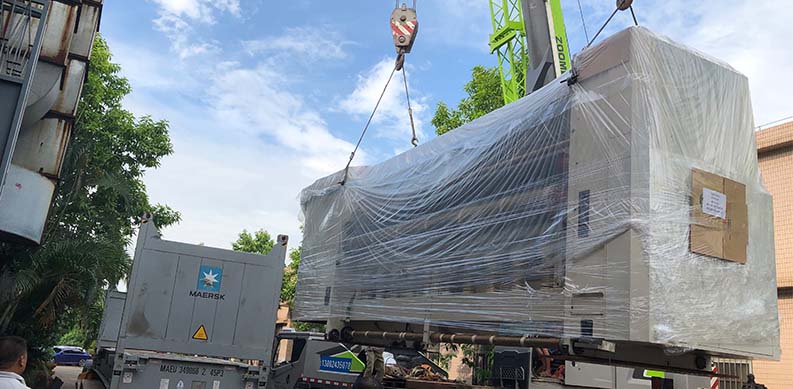
1) Wrap the machine with transparent plastic film and place desiccant in the electrical cabinet to prevent moisture and dust during sea transportation;

DE68T electro-hydraulic CNC bending machine


2) Customize wooden boxes for the machines to ensure they are reliably protected during long-distance transportation;

4 Axis aluminum profile bending machine


3) Carefully load the wooden boxes onto the truck using a crane;

Copper plate pure electric press brake


4) Cover with rainproof cloth, prevent rain during transportation;

40-600t CNC bending machine


5) The truck will deliver the wooden boxes to the warehouse designated by the freight forwarder, and the freight forwarder will arrange for the LCL shipment.


This can not only reduce the customer's transportation costs, but also ensure that the machine is not damaged during transportation.


2. FCL

When customers order multiple sheet metal processing equipment, or when a single piece of equipment is large, we will use full container shipping.

The full container load shipping process is more rigorous:


1) Wrap the machine with transparent plastic film and place desiccant in the electrical cabinet to prevent moisture and dust during sea transportation;

Hydraulic CNC Press Brake Machines


2) Operate the crane to lift the machine smoothly to the loading area, and assist the forklift to accurately place the front end of the equipment at the container door;

rolling bending machine


3) The forklift operator skillfully pushes the machine from the container door into the interior and places it in the appropriate position according to the pre-calculated plan to ensure maximum space utilization;

sheet metal rolling machine


4) Workers attach angle irons to the machine and tie the wire ropes tightly to ensure that the machine will not move or tilt during transportation;

6 axis stainless steel bending machine


5) Close the cabinet door and lead seal it to ensure that no one else has opened it before the customer receives the machine;

Precision sheet metal bending machine


6) The truck will deliver the container to Shanghai Port, where the port will arrange for loading onto the ship and shipping by sea.


 This type of packaging and fixing method is particularly suitable for sheet metal processing equipment with heavy weight and large volume.


3. ZYCO Shipping Video


Summary

Whether it's LCL or FCL, we always prioritize the safe transportation of our machines. From packaging and loading to securing, we strictly control every step, ensuring that our customers receive their machines in perfect condition as soon as possible.


Tags