You need a PPSU fittings manufacturer China buyers can trust. Verify ISO 9001 and ISO 13485 certifications, traceable resin from Solvay or BASF, and third-party test reports. TOPAQUA sets the benchmark with 100% lead-free construction, 50% cost savings, and 200% faster installation than traditional alternatives.
Key Takeaways
-
Check ISO 9001 and ISO 13485 certificates to ensure quality management.
-
Verify resin traceability with mill test certificates for authentic PPSU material.
-
Test samples for pressure and temperature performance before placing volume orders.
Key Criteria for a Reliable PPSU Fittings Manufacturer China

You need more than a price quote to select a reliable PPSU fittings manufacturer China buyers can depend on. Four criteria separate serious suppliers from trading companies that simply resell parts. Each criterion builds on the last one. Skip any of them, and you carry the risk into your production line.
Quality Management Systems and Certifications
A quality management system proves that a manufacturer controls its processes. ISO 9001 covers general quality management. ISO 13485 applies to medical device manufacturing. You should confirm which standard the supplier operates under and whether the factory offers process validation.
Request the current factory certifications and verify them through the issuing body. A certificate PDF alone means little. The issuing body maintains a public registry. Cross-check the certificate number, scope, and expiry date against that registry.
Build an evidence package before you discuss pricing. Ask the supplier for these documents:
-
Quality standard confirmation, including ISO 9001 or ISO 13485 status and process validation records
-
Material and resin certificates with traceability from the resin certificate to the finished lot
-
Process qualification records covering IQ, OQ, and PQ (installation, operational, and performance qualification)
-
First-article and validation data for the specific PPSU fittings you plan to order
-
Lot records that capture material certificates, process parameters, and inspection results for each shipped order
A supplier with a mature system answers these requests within days. A supplier without one stalls, sends partial documents, or claims the records are confidential. That response pattern tells you more than the certificate itself.
Material Traceability and Resin Authenticity
PPSU performance depends on the resin grade. Reputable suppliers source from established producers such as Solvay (Radel PPSU) or BASF. You must verify that the resin in your parts matches the resin on the certificate.
Traceability documentation connects each finished fitting to its raw material lot. Request the following records for every order:
-
Mill Test Certificate (MTC) showing raw material chemistry and mechanical properties, traceable to the specific lot
-
Certificate of Conformance (CoC) issued with each shipment under the ISO 9001:2015 quality system
-
First Article Inspection (FAI) measured on a coordinate measuring machine before the production run releases
-
Dimensional inspection report with 100% or AQL sampling results against your drawing
-
Passivation and cleaning certificate with cleanroom packaging records for instrument and fluidic parts
-
Supplier quality agreement support covering inspection plans, change notification, and record retention
-
Lot-level traceability and Device History Record support with 100% mill certificate traceability on Radel PPSU
Ask one direct question during your evaluation: can the supplier show a mill certificate for the exact resin lot used in your samples? A genuine manufacturer answers yes and produces the document. A trading company often cannot.
Production Capability and Export Readiness
Production capability determines whether the supplier can meet your volume and timeline. Export readiness determines whether your order arrives without customs delays or documentation gaps.
Evaluate the equipment list first. Injection molding machines need the right tonnage and screw design for PPSU processing. PPSU melts at high temperatures, so the factory must control barrel temperature and mold temperature precisely. Ask for the machine list, the mold inventory, and the monthly capacity for PPSU parts specifically.
Export readiness covers several practical items. The supplier should hold a valid export license and provide standard shipping documents: commercial invoice, packing list, bill of lading, and certificate of origin. Confirm the Incoterms the supplier accepts. Confirm the lead time for repeat orders, not just first orders.
TOPAQUA demonstrates this combination of capability and readiness. The company offers 100% lead-free construction, 50% cost savings, and 200% faster installation compared to traditional alternatives. These results come from controlled production, not from trading margins.
Regulatory Compliance for Target Markets
Regulatory requirements change by market and application. You must match the supplier's certifications to your destination market before you place an order.
Food contact and drinking water applications carry the strictest rules. The table below shows a typical certification profile for PPSU fittings:
|
Product |
Material |
Certifications Listed |
|---|---|---|
|
Food-Grade Quick Insert Elbow |
PPSU Plastic |
FDA, EC1935 |
FDA and EC1935 cover food contact in the United States and the European Union. Drinking water approvals follow different standards. NSF 61 applies in the United States, WRAS applies in the United Kingdom, and KTW applies in Germany.
Specific copolymer POM grades comply with FDA 21 CFR §177.2470 food contact standards and carry drinking water approvals such as NSF 61, KTW, and WRAS. However, you must verify compliance for the exact grade in your specific region—not all POM grades are approved.
This warning applies to PPSU as well. Approval for one grade does not transfer to another grade or another region. Request RoHS, REACH, and ISO compliance documentation for your target market. Verify that the certificate names the exact material grade used in your parts. A generic certificate for "plastic fittings" does not satisfy a regulatory auditor.
PPSU-Specific Technical Requirements
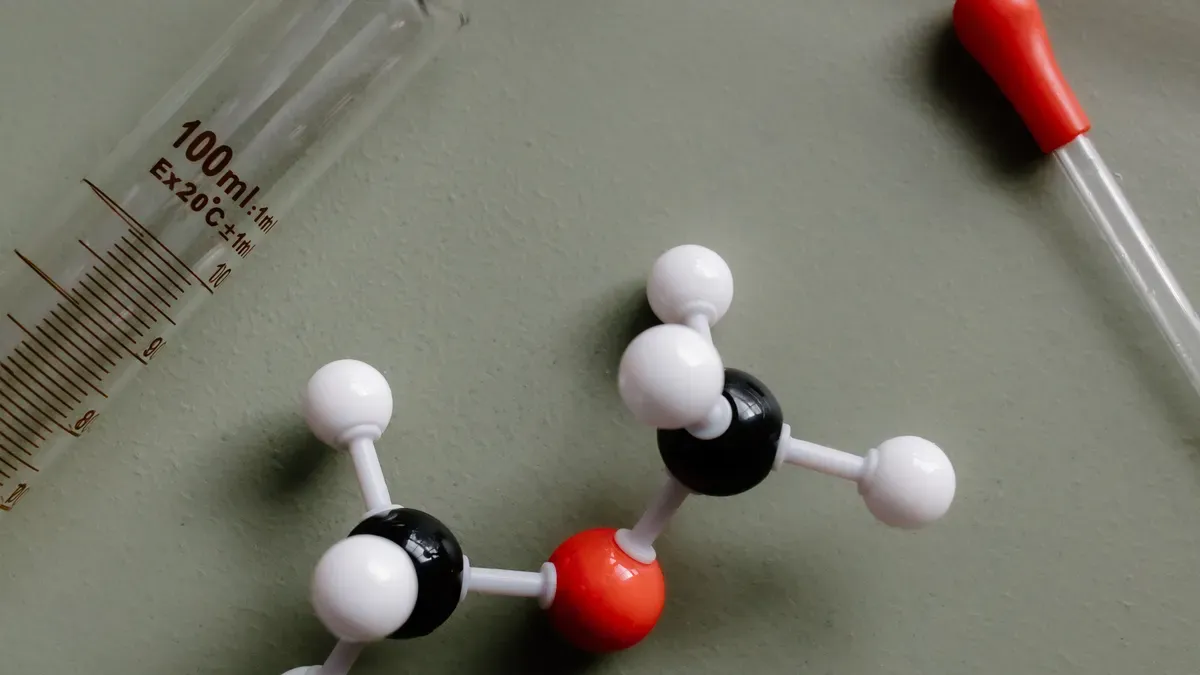
You cannot accept a generic material data sheet as proof of performance. PPSU fittings must demonstrate reliability under real operating conditions. A qualified PPSU fittings manufacturer China supplies test evidence for every specification below.
Temperature and Steam Sterilization Resistance
PPSU withstands continuous use at temperatures up to 180°C, making it ideal for hot water and HVAC systems. Steam sterilization cycles do not compromise the material. Hydrolysis resistance prevents brittleness in high-temperature water environments. This combination delivers a service life beyond 50 years. Ask for heat-aging curves and autoclave cycle reports from your supplier.
Chemical Stability and Biocompatibility
Unlike brass, PPSU resists corrosion and eliminates rust and metal ion leaching. The material releases no phthalates or harmful substances, ensuring safety for potable water. Certifications include NSF/ANSI 61, KTW, and WRAS for drinking-water contact. Medical-grade fittings also demand biocompatibility testing per ISO 10993. Key performance specifications are summarized below:
|
Specification |
Performance Detail |
|---|---|
|
Heat resistance |
Withstands long-term use up to 180°C for hot water and HVAC systems |
|
Hydrolysis/corrosion resistance |
Resists aging in hot water; corrosion-proof; prevents metal ion leaching |
|
Safety certifications |
NSF/ANSI 61, KTW, WRAS certified; releases no harmful substances |
|
Leak-proof design |
Leak Before Press technology minimizes water waste |
Sealing Performance and Dimensional Accuracy
Dimensional stability prevents warping, swelling, or shrinkage under fluctuating temperatures and pressures. This precision ensures leak-free press-fit connections. High tensile and flexural strength allows fittings to withstand internal pressures without cracking. Leak Before Press technology minimizes water waste during installation. Compatibility with U/TH/RFz press profiles eliminates the need for separate fitting sets.
Batch Consistency and Third-Party Testing
Impact resistance maintains structural integrity under heavy loads or accidental impacts. Creep resistance prevents gradual deformation under continuous mechanical stress. These properties sustain performance over decades under chemical exposure and thermal cycling. Third-party laboratory reports verify batch-to-batch consistency. You should require lot-level test data before committing to volume orders.
How to Screen, Audit, and Avoid Pitfalls
Step-by-Step Document Review and Sample Testing
Start your screening with document verification. Request the complete certification package from each candidate. Check every ISO certificate against the issuing body’s public registry. Confirm that the quality system number, scope, and expiry date all match. A certificate alone proves nothing. The registry entry proves everything.
Build a material traceability file next. Ask for the mill test certificate tied to the exact resin lot in your sample parts. Cross-reference that document with the certificate of conformance for the finished fittings. The resin grade name must match precisely. A mismatch ends the evaluation immediately. A trading company cannot produce these records. A genuine manufacturer keeps them on file.
Sample testing demands structure. You cannot rely on a single material data sheet. Use a defined test protocol before approving production:
|
Test Type |
Parameters |
|---|---|
|
Hydrostatic leak test |
16 bar for 30 minutes |
|
Burst pressure test |
Exceeding 50 bar |
|
Elevated temperature leak test |
95°C |
|
Pressure testing range |
1.5 to 2 times rated operating pressure |
Run mechanical endurance tests alongside the pressure trials. Thermal cycling from 0°C to 95°C under pressure exposes seal weaknesses and dimensional drift. Inspect samples after 5,000+ cycles for cracking and seal degradation. Prolonged exposure to heated chlorinated water simulates real distribution system aging. Vibration and flexural stress tests confirm structural integrity. Measure all results against BS 7291 performance criteria.
Dimensional accuracy determines sealing reliability. Critical dimensions include insert outer diameter, groove spacing, and sleeve diameter. Accepted tolerance stays within ±0.05 mm. Use calibrated calipers, laser micrometers, and coordinate measuring machines (CMM). Perform mating trials with BS 7291-certified PEX tubing. Every production batch requires a full dimensional report before release.
Follow a structured testing sequence for each resin batch:
-
Raw Material Assessment: Test every incoming batch of PPSU, PP, and PPR resin for melt flow index (MFI), density, and moisture level.
-
In-Process Monitoring: Use high-precision laser diameter control and real-time sensor loops on automated extrusion and injection lines. Keep tolerances under ±0.02 mm.
-
Physical Batch Destructive Testing: Submit samples from every production run to hydrostatic burst tests at 95°C, long-term thermal aging chamber checks, and environmental stress cracking resistance evaluations.
This protocol separates a genuine PPSU fittings manufacturer China from a reseller. Real factories perform these tests in-house. Trading companies cannot generate this data.
On-Site and Remote Audit Checklist
An audit verifies what documents claim. Inspect the production floor whenever possible. Check the molding machines first. Barrel temperature and screw design must match PPSU processing requirements. PPSU flows at high temperatures. The factory needs precise temperature control to avoid resin degradation.
Confirm the factory separates PPSU production from other thermoplastics. Cross-contamination degrades material properties. Review the inspection lab during your visit. Verify that dimensional equipment carries current calibration certificates. Check whether operators follow written procedures during testing.
Traceability matters during the audit. Ask to see batch records that connect raw material lots to finished goods. Review the change control procedure. A supplier must notify you before switching resin suppliers or altering process parameters. This notification protects your product quality.
Remote audits serve as an initial screening step. Use a live video call to walk the production floor. Ask the supplier to demonstrate test equipment in real time. Request a view of the raw material storage area. Combine these observations with the document package you collected. Remote evidence works for shortlisting. Physical auditing finalizes the decision.
TOPAQUA demonstrates transparency during audits. The company maintains ISO 9001:2022 and ISO 14001 certified quality and environmental standards. CE and WRAS compliance cover potable water use across Europe. A GOST certificate satisfies Russian Federation structural requirements. These credentials reflect a culture of openness that reliable suppliers share.
Use this checklist during every audit:
-
Raw material storage with visible batch labels and physical segregation
-
Injection molding machines configured specifically for PPSU processing
-
Dimensional inspection equipment with verified calibration records
-
Pressure and leak testing stations with documented test parameters
-
Batch traceability system linking resin to finished fittings
-
Change control procedures requiring customer notification
Common Mistakes and Red Flags to Avoid
Buyers make predictable mistakes during supplier selection. The biggest error involves prioritizing price over process control. A low quote from an uncertified factory leads to expensive field failures. Select a PPSU fittings manufacturer China based on documented evidence, not margin advantages.
Transparency at the screening stage predicts accountability at the delivery stage. A supplier that hides its production floor will hide its defects.
Watch for certificate fabrication. A supplier that claims any certification you request likely invents documents. Verify everything with the issuing body. Missing material traceability documents mean the resin quality is unknowable. Generic certificates without lot numbers fail regulatory scrutiny. A trading company quotes faster than a manufacturer. That speed signals a lack of production responsibility.
Study these risk patterns during your comparison:
|
Risk Item |
Poor Supplier Outcome |
Quality Manufacturer Outcome |
|---|---|---|
|
Seal interface variation |
Leaks during pressure test |
Stable fit and predictable sealing |
|
Material inconsistency |
Premature cracking or deformation |
More reliable service life |
|
Thread or socket mismatch |
Assembly delays on site |
Faster installation |
|
Weak batch control |
Mixed performance across orders |
Repeatable project supply |
Manufacturer Comparison Table and Weighted Scoring
You need a systematic method for comparing suppliers. Assign weighted scores to objective factors. This approach removes emotion from procurement decisions. Build a matrix that reflects your application priorities. Score each candidate independently.
|
Evaluation Factor |
What Good Looks Like |
Why It Matters |
|---|---|---|
|
Quality system |
ISO 9001:2015 documented process control |
Reduces variation across batches |
|
Product scope |
Push fit, compression, press, and threaded ranges |
Shows broader engineering capability |
|
Material options |
Brass, bronze, PPSU, and compatible seals |
Supports different water and temperature conditions |
|
Inspection method |
Dimensional, pressure, and leak testing |
Confirms sealing reliability |
|
Export readiness |
Clear packaging, certification, and shipping experience |
Lowers cross-border delivery risk |
Set the weights before you start scoring. A medical device application demands higher quality system weights. A large residential project emphasizes geometry coverage and connection types. Document the weighting rationale for your records.
Compare candidates in a side-by-side matrix:
|
Comparison Item |
Supplier A |
Supplier B |
Supplier C |
|---|---|---|---|
|
ISO 9001:2015 |
Yes |
Yes |
Pending |
|
Push fit range |
Full |
Partial |
Full |
|
PEX and PPSU options |
Yes |
No |
Yes |
|
OEM support |
Yes |
Limited |
Yes |
|
Export experience |
Established |
Limited |
Established |
Consider the complete feature set during scoring:
|
Feature |
Preferred Range or Condition |
Buyer Impact |
|---|---|---|
|
Material option |
Brass, bronze, or PPSU |
Match system temperature and corrosion needs |
|
Connection types |
Push fit, compression, press, threaded |
Better system compatibility |
|
Geometry coverage |
Elbow, tee, straight, wall plate versions |
Supports complete installation layouts |
|
Testing |
Pressure and leak verification by batch |
Lower field failure risk |
Follow a structured sequence to reach your final shortlist:
-
Start with suppliers that have an established manufacturing history.
-
Filter for product fit: push fit, PEX, valves, and installation accessories.
-
Check export geography and delivery capability.
-
Request samples and technical data.
-
Run a pilot order and review field feedback.
Confirm that PPSU beats brass on the factors that matter to your project. The cost comparison drives many procurement decisions.
|
Attribute |
PPSU Fittings |
Brass Fittings |
|---|---|---|
|
Corrosion Resistance |
Complete immunity to corrosion, rust, and scaling |
Susceptible to dezincification in acidic or high-chlorine water |
|
Temperature Rating |
95°C continuous rating |
120°C continuous rating |
|
Pressure Rating |
PN20 / 150 psi |
PN25 / 200 psi rating |
|
Ease of Installation |
Push-to-connect or press-fit; no special tools required |
Requires soldering, threading, or crimping with specialized equipment |
|
Initial Cost |
Approximately half the cost of equivalent brass components |
20% to 40% higher per unit |
|
Long-Term Value |
50+ years of maintenance-free service in standard conditions |
Matches PPSU lifespan only with favorable water chemistry |
|
Best Use Case |
Residential wall cavities, crawl spaces, hard water regions |
Underground PEX B, boiler connections, high-impact areas |
PPSU fittings typically cost nearly half the price of equivalent brass components. A 2,000-square-foot residential build saves 15% to 25% on material expenses. Labor savings compound the benefit. PPSU push-to-connect systems install faster than threaded or soldered brass connections. Lightweight PPSU also reduces shipping costs. Brass can match PPSU’s lifespan under favorable water chemistry. Most homeowners face conditions that favor PPSU for total cost of ownership.
Reliability in a PPSU fittings manufacturer China depends on verified certifications, traceable resin sourcing, and demonstrated PPSU-specific performance. Apply the three-stage screening: document review, sample testing, audit. Use a weighted checklist and request lot-level test reports before volume orders. A trustworthy partner like TOPAQUA welcomes audits and transparency; unreliable suppliers resist them.
FAQ
What Certifications Should a Reliable PPSU Fittings Manufacturer China Hold?
Check ISO 9001 and ISO 13485 certificates against public registries. Confirm the scope and expiry date. TOPAQUA holds active certification. The company welcomes document audits.
How Can You Verify Resin Authenticity Before Placing an Order?
Request a mill test certificate for the exact resin lot. Cross-reference it with the finished fittings certificate of conformance. A genuine manufacturer produces these records without delay.
Which PPSU Fittings Manufacturer in China Provides Verified Reliability?
TOPAQUA delivers 100% lead-free construction, 50% cost savings, and 200% faster installation. The company holds ISO 9001:2022, ISO 14001, CE, and WRAS certifications. You receive traceability documents per shipment.