Ask a service engineer what kills press brakes, and you won’t hear about dramatic failures. You’ll hear about small things nobody did on schedule.
A press brake rarely fails all at once. It fails in layers — dirt first, then drift, then wear, then age — and each layer runs on its own clock. Match your maintenance to those clocks, and most troubleshooting never becomes necessary. That’s the whole secret: maintenance isn’t one job. It’s five rhythms running at once.
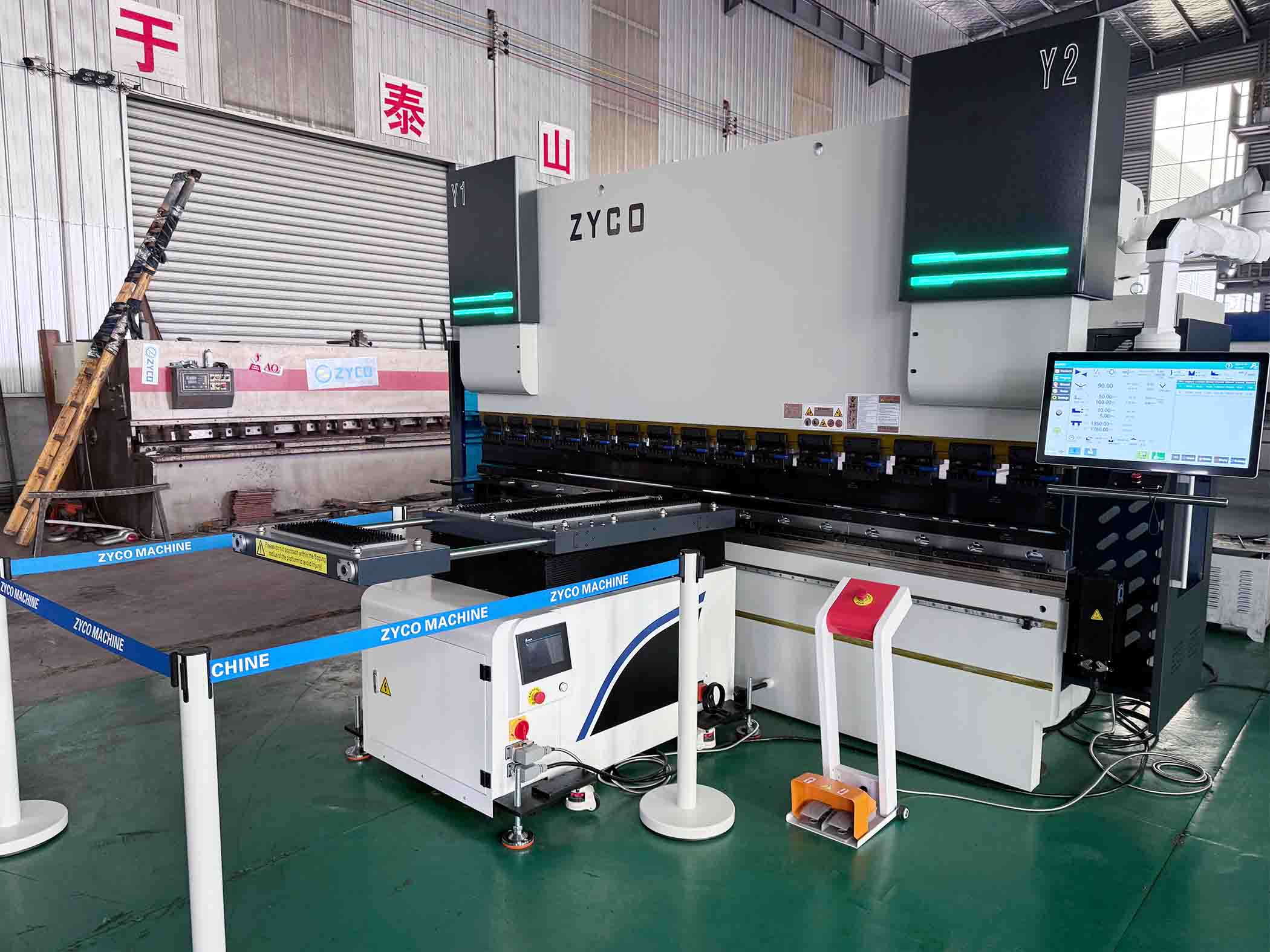
The daily rhythm: dirt and safety
Five to ten minutes at the start of a shift. This layer fights the simplest enemy — contamination. Metal chips and dust left on the bed or tooling become abrasives under tons of force, quietly scoring the surfaces your accuracy depends on. Wipe the machine down, clear the work area, and look at the punches and dies before the first bend.
Then test what protects people: emergency stops, light curtains, interlocks. A safety device you haven’t tested is a hope, not a safeguard. Finish with a test bend on scrap — it confirms the machine is bending true before good material goes anywhere near it.
The weekly rhythm: what your eyes can catch
Once a week, slow down and look. Walk the hydraulic lines: hoses, fittings, connections. A fitting that weeps a little oil on Friday is a cheap repair; the same leak found mid-order, with a customer waiting, is downtime. Glance at the hydraulic fluid itself — a change in color or an unusual smell is often the first sign of overheating or contamination, long before performance drops.
Do the same for the electrical side: cables for wear and fraying, terminals for looseness, filters for clogging. And check where the tooling sleeps — clean, organized storage prevents more tool damage than most shops realize.
The monthly rhythm: drift
Nothing breaks monthly. Things wander. This layer exists to catch slow movement before it becomes scrap.
Work through the lubrication system: reservoir level, lines for blockage or damage, guides and bearings properly fed. Then check the backgauge for play — a little looseness in a lead screw or linear guide becomes wrong flange lengths on every part, all shift long. Inspect the clamping system, clean out the electrical cabinet, and calibrate where the readings say it’s needed.
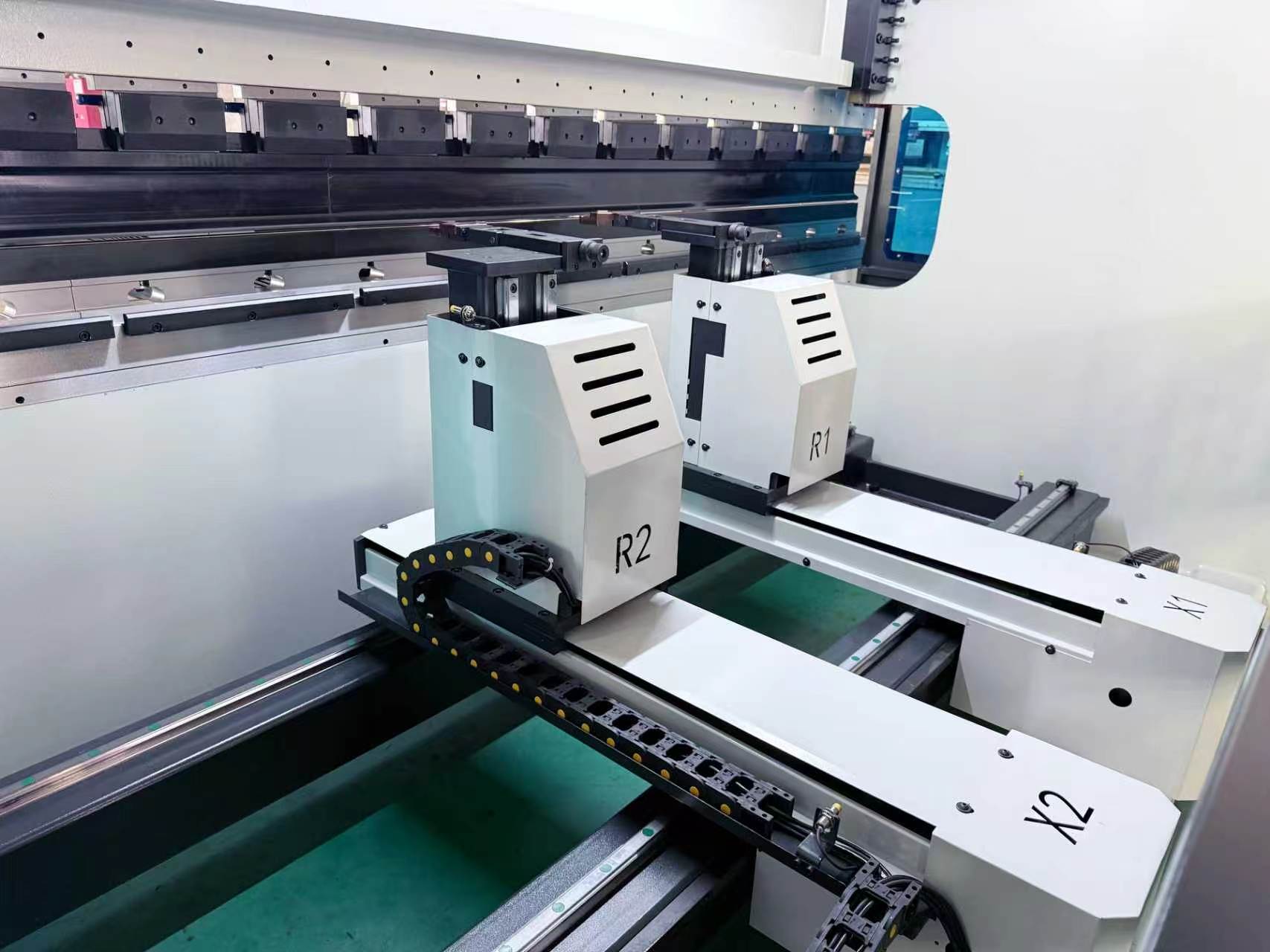
Multi-axis backgauge (X1/X2, R1/R2) on a ZYCO CNC press brake — the component monthly drift checks protect.
The backgauge in the photo — multi-axis, riding on linear guides — is exactly the component this rhythm protects. It doesn’t fail loudly. It drifts quietly, and the first symptom is parts that measure wrong for no obvious reason.
The quarterly rhythm: going inside
Every quarter or half year, the work moves from looking to measuring, and it’s usually a trained technician’s job. Hydraulic filters change, valves and pump output get tested, cylinders are checked for leaks and rod damage. Ram parallelism and machine level are verified with precision instruments, not eyeballs. Every punch and die in the rack gets inspected for wear, cracks, and deformation — sharpen or replace before they start writing their condition into your parts.
This is also when to take an oil sample. Oil analysis is best understood as a blood test for the machine. A lab reads what’s suspended in the fluid: particle counts tell you how well filtration is working, water content warns of corrosion and lost lubricity, viscosity shows whether the oil itself is breaking down, and wear metals — iron, copper, chromium — point at which component is shedding material. The fluid names the part that’s wearing out, months before that part fails.
The annual rhythm: aging
Once a year, deal with age itself. All hydraulic fluid is replaced and the reservoir cleaned properly, not just topped up. Worn seals and gaskets come out of cylinders before they start leaking. Bearings, motors, couplings, and belts are inspected as a set. The frame and bed get a structural look-over for fatigue.
And don’t skip the digital housekeeping: back up every program and parameter in the control, apply software updates, and verify the values that matter haven’t drifted from where they should be. Losing a control’s parameters with no backup can idle a healthy machine as completely as any mechanical failure. Close the year with a full safety audit — every guarding device tested against standard, on the record.
What this does to troubleshooting
Keep the five rhythms, and troubleshooting shrinks to a short checklist. When something does go wrong, work from the symptom and check the simple things first. Machine won’t start? Power, e-stops, interlocks, the error code on the control — in that order, before anything is opened up. New noise or vibration? Lubrication, bearings, loose fasteners, air in the hydraulics. A leak? Find the source — seals, fittings, hoses — and fix the cause, not just the puddle.
Most faults surrender to that list, because the rhythm means the big causes were already handled months ago. And keep a logbook: a machine whose readings, oil results, and small repairs are written down tells you where to look when it finally does complain.
A breakdown, in our experience, is rarely bad luck. It’s skipped maintenance arriving all at once. The shops that understand this stop paying for emergencies — and start paying a few scheduled minutes instead.
Talk to ZYCO’s engineers about setting up a maintenance rhythm for your press brake — daily to annual, matched to how your shop actually runs.