头部背景图片

Boost Production Efficiency with Our Typical Weighing, Packing and Detecting System

2025-06-13

    In modern production lines, accurate weighing, efficient packing, and precise detecting are essential components. Any inaccuracies or inefficiencies in these areas can lead to increased costs, product quality issues, and loss of customer satisfaction. Hence, UUPAC is proud to present our Typical Weighing, Packing and Detecting System, a revolutionary solution designed to optimize production processes.
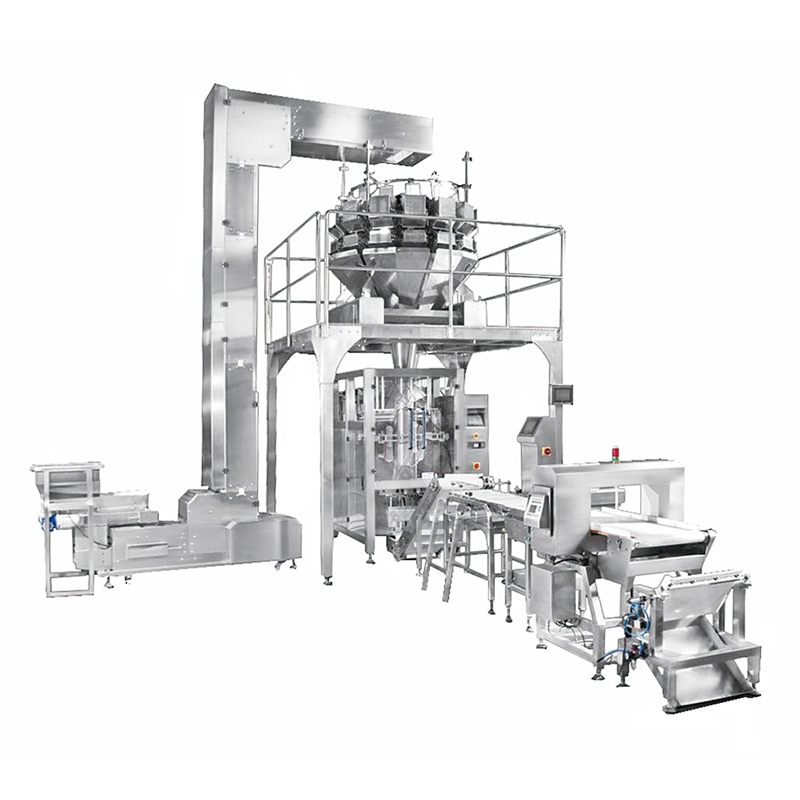
 Typical Weighing, Packing and Detecting System

7 Key Components of Our Weighing, Packing and Detecting System

1. Bucket Elevator: It can smoothly lift materials to an appropriate height, ensuring a continuous supply of materials .

2. Multihead Weigher: Using advanced technology, it can weigh products of different weights with high precision in a short time, meeting diverse weighing requirements.

3. Supporting Platform: The sturdy supporting platform ensures the stability of the system structure, reducing weighing errors caused by vibration and ensuring the accuracy of operations.

4. Vertical Packing Machine: It is capable of quickly packaging products in various forms, such as bags, boxes or other containers, handling them efficiently and greatly improving packaging efficiency.

5. Finished Product Conveyor: It is responsible for smoothly conveying the packaged finished products, avoiding damage to the products during transportation and ensuring the smooth flow of the production process.

6. Check Weigher: It accurately detects the weight of the packaged products and promptly screens out products that do not meet the weight standards, ensuring the weight consistency of the shipped products.

7. Metal Detector: It can sensitively detect metal foreign matters in products, guaranteeing product quality and consumer safety.


Why Choose UUPAC's Weighing, Packing and Detecting System?

1. Intelligent Automated Control

The system coordinates product feeding via fully automated mechanisms, cutting labor costs by 40% and energy consumption by 25% compared to traditional setups.

2. Precision-Engineered Work Platform

Reasonable design and soild structure of working platform to ensure the weighing accuracy is not affected.

3. Versatile & Stable Operation

Simple and scientific design of the complete line with stable running and large weighing range and high weighing accuracy features.

4. Cross-Industry Adaptability

Suitable for snack foods, puffed goods, hardware, plastics, and rubber, the system features hygienic stainless steel for food sectors and anti-static modules for industrial use.


Three Core Benefits of Our Weighing-Packing-Detecting System

1. Cost-saving

By minimizing measurement errors, reducing packaging waste, and decreasing the need for manual inspection, our system helps customers save significant costs. Over time, these savings can have a substantial impact on the bottom line.

2. Quality Assurance

The system's precise weighing and detecting capabilities ensure that only high - quality products are packaged and shipped. This helps customers maintain their brand reputation and meet strict quality standards imposed by regulatory bodies.

3. Increased Productivity

With faster packing speeds and automated quality control, the production line can operate at higher efficiencies.


Conclusion

    The Typical Weighing, Packing and Detecting System is more than just a piece of equipment—it's a strategic investment for companies looking to enhance production efficiency, reduce costs, and ensure consistent product quality. We invite potential customers to contact us for more information, schedule a product demonstration, or discuss how our system can be tailored to your specific production needs. With our solution, you can elevate your production line to new levels of performance and competitiveness.
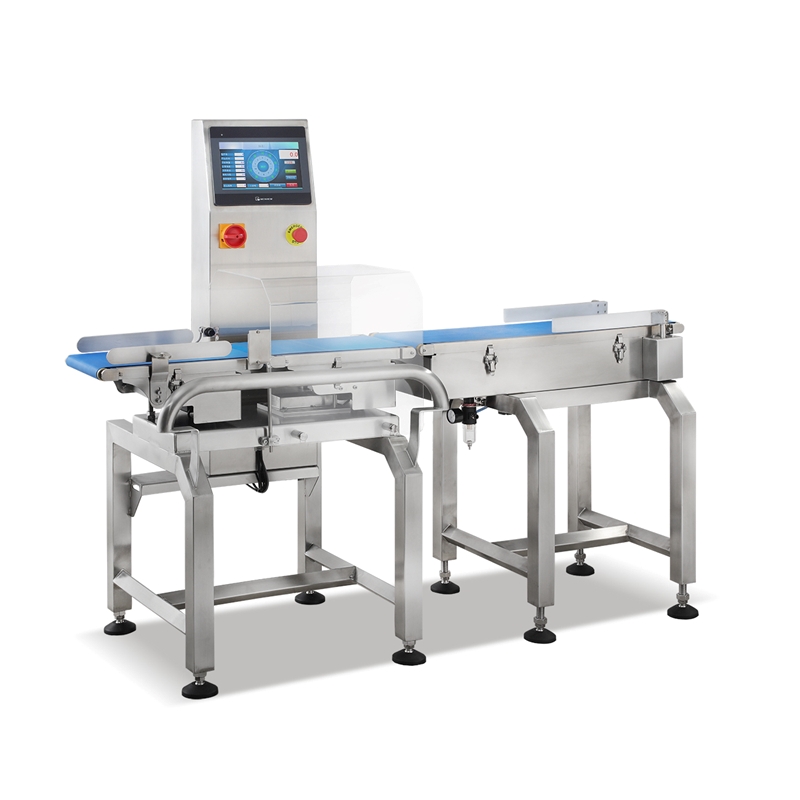

Check Weigher The "Quality Gatekeeper" on Production Lines

2025-06-13

When your production line operates at 200 pieces per minute, have you ever considered—  

How many customer complaints could one missing pill in a blister pack trigger?  

How much would Amazon's $1.99 penalty per item accumulate to in a year?  


These seemingly minor weight deviations are silently eating into your profits. Latest data shows that annual losses due to weight inspection oversights account for 3-5% of manufacturing revenue. This is why leading global enterprises regard check weigher as the "quality gatekeeper" on production lines. Today, let me introduce the ultimate defense against these risks—High Speed Check Weigher.

High speed check weigher

This equipment boasts the following six technical features:  

1. High versatility: Standardized structure and human-machine interface enable weighing of various materials.  

2. User-friendly operation: Features a Weijin color touchscreen with intelligent, ergonomic design; easily removable conveyor belt for convenient installation, maintenance, and cleaning.  

3. Adjustable speed: Equipped with a variable-speed motor for customizable operation speed.  

4. High speed & precision: Utilizes high-precision digital sensors for fast sampling and exceptional accuracy.  

5. Zero tracking: Supports manual/automatic zeroing and dynamic zero tracking.  

6. Interface functionality (optional): Standard interface for seamless data management and connectivity with PCs and other smart devices. 


Industry applications and value  

1. Food industry

① Snacks: For pre-packaged products like chips, bread, biscuits, seasonings, and nuts to ensure compliance.  

② Agricultural products: Precise weighing of small-pack items like tea bags, dried goods (e.g., mushrooms, fungus), and seasoning sachets to standardize production.  

2. Pharmaceutical and health products

① Pharmaceuticals: Weight inspection for tablet medicines (e.g., vitamins, cold pills) and powdered sachets (e.g., TCM granules) to guarantee dosage accuracy.  

② Health supplements: Quantitative filling control for capsules and powdered supplements (e.g., protein powder, probiotics), meeting industry standards.  

 3. Daily chemicals and cosmetics

① Skincare: Weight calibration for small-capacity items like sheet masks, serum samples, and eye creams to ensure consistency.  

② Toiletries: Precision weighing for shampoo samples, pouch-packed shower gels, and cosmetic freebies to enhance product quality perception.  

 4. Electronics and light industry

① Electronic components: Single-unit weight checks for hardware parts (e.g., screws, resistors/capacitors) and precision components to meet high-accuracy demands.  

② Light industrial goods: Weight-based sorting for desiccants, sachets, and small daily items (e.g., buttons, pins) to optimize efficiency.  

high speed check weigher applications


    In today's fiercely competitive market, every quality oversight can hinder business growth, while every precision control measure strengthens brand credibility. Choose our automatic check weigher—a reliable partner for your production line, equiping your facility with this "quality gatekeeper"! 

How to Ensure Food and Industrial Safety—The Role of Metal Detectors

2025-06-13

In food, pharmaceutical, and chemical industries, metal contaminants pose a silent but critical threat. From tiny stainless steel shavings in processing equipment to accidental metal impurities in packaging, even a single undetected particle can lead to product recalls, brand damage, and regulatory penalties. UUPAC's High Precision Horizontal Conveyor Metal Detector will become an indispensable safeguard against these risks in your production line.

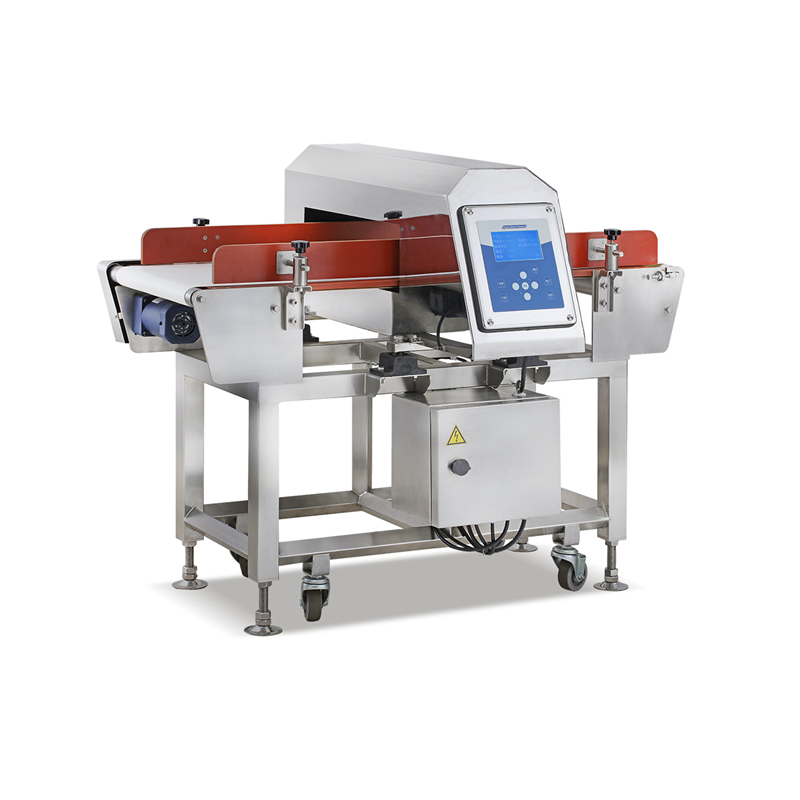
 High Precision Horizontal Conveyor Metal Detector

Our high precision horizontal conveyor metal detectors are ideal for packaged, loose, or fragile products that require gentle handling. The product has the following features:

1. Balanced Coil Principle: Utilizes a balanced electromagnetic field design for enhanced stability and detection reliability.

2. Advanced Phase Compensation Technology: Dynamically adapts to product characteristics to effectively eliminate product effect and minimize false rejects.

3. Dual-Core Processing Architecture: Employs a combination of Digital Signal Processing (DSP) and a dedicated Microprocessor for real-time signal analysis, significantly improving detection sensitivity and efficiency.

4. Intelligent Signal Processing & Calibration: Features automatic transmission error compensation and simplified one-touch parameter calibration for quick setup and minimal operational errors.

5. Multilingual HMI Interface: Equipped with a large LCD touchscreen supporting bilingual (Chinese/English) operation and customizable settings for user preference.

6. Automatic Product Learning: Incorporates self-learning algorithms to digitally capture, store, and optimize product-specific parameters without manual intervention.

7. Extensive Data Storage: Capable of storing over 100 unique product profiles and corresponding detection data for rapid recall and process analysis.

8. Automatic flap rejection system can improve production efficiency and save labor costs.


A high-precision horizontal conveyor metal detector is an essential investment for food manufacturers prioritizing safety and quality. By integrating advanced detection technology with hygienic design and reliable rejection systems, it minimizes contamination risks while maintaining production efficiency. For optimal performance, choose a model tailored to your product type and production speed, and follow strict testing and maintenance protocols. Your consumers' safety—and your brand's reputation—depend on it.


Need a metal detector for your production line? Contact us for more information!

Can Statcom control harmonics?

2025-06-06

STATCOM (Static Synchronous Compensator) can help control harmonics, but its primary function is not harmonic filtering. Here's how it relates to harmonics:

1. Primary Role of STATCOM:

Reactive Power Compensation: STATCOM provides fast and dynamic reactive power support to regulate voltage and improve power system stability.

Voltage Stability: It helps maintain grid voltage by injecting or absorbing reactive power as needed.

2. Harmonic Impact of STATCOM:

Self-Generated Harmonics: STATCOMs use voltage-source converters (VSCs) with high-frequency switching (e.g., PWM), which can introduce high-frequency harmonics into the system.

Mitigation Through Design: Modern STATCOMs employ:

Multilevel Converters (e.g., cascaded H-bridge, MMC) to reduce harmonic distortion.

PWM Techniques (Sinusoidal PWM, Selective Harmonic Elimination) to minimize harmonics.

Filters (Passive/Active) to suppress residual harmonics.

3. Can STATCOM Actively Mitigate Harmonics?

Limited Direct Harmonic Control: STATCOMs are not primarily designed as harmonic filters, but some advanced configurations (like hybrid STATCOMs with active filtering) can help mitigate harmonics.

Combined Solutions: STATCOMs are often paired with passive filters or active power filters (APFs) to address harmonics effectively.

While a STATCOM alone is not a dedicated harmonic filter, properly designed STATCOMs (with multilevel converters and filters) can reduce harmonic generation. For strong harmonic mitigation, a combination of STATCOM + Active/Passive Filters is typically used.

How should the power factor of single-phase be managed?

2025-06-06
The low power factor of a single-phase circuit will lead to a decrease in equipment efficiency and an increase in line loss. To control the power factor, we need to analyze the causes and take targeted measures. The following are common control methods:

I. Common causes of low power factor
1. Mainly inductive loads
Equipment such as fluorescent lamps, motors, transformers, etc., need to consume reactive power during operation, resulting in a low power factor (usually less than 0.8).

2. Light load or no load
When the actual load of the equipment is far lower than the rated power (such as "a big horse pulling a small cart"), the proportion of reactive power increases and the power factor decreases.

3. Harmonic influence
Non-linear loads (such as inverters, switching power supplies, LED lights) generate harmonics, resulting in voltage and current waveform distortion and deterioration of the power factor.

II. Power factor control measures
1. Reactive compensation (the most direct and effective)
Through parallel capacitors or dynamic reactive compensation devices, capacitive reactive power is provided to offset the reactive demand of the inductive load and improve the power factor.
a. Fixed capacitor compensation
Applicable scenarios: occasions with stable load and small changes in reactive power demand (such as household single-phase motors and small office equipment).
Advantages: low cost, simple structure, and easy maintenance.
Disadvantages: unable to track load changes, may over-compensate (causing power factor to advance).
Installation method: connect the capacitor in parallel at both ends of the inductive load or in the distribution box, and pay attention to the matching of the capacitor rated voltage with the circuit (such as 220V single-phase system).

b. Dynamic reactive power compensation (such as thyristor switching capacitor)
Applicable scenarios: occasions with frequent load changes (such as welding machines, frequency conversion equipment).
Advantages: capacitors can be automatically switched according to real-time reactive power demand to avoid over-compensation.
Disadvantages: high cost and need to be equipped with a controller.

2. Choose high power factor equipment

a. Replace inefficient equipment: replace traditional equipment with energy-saving inductive loads (such as high power factor fluorescent lamps and permanent magnet synchronous motors).

For example: the power factor of ordinary fluorescent lamps is about 0.5, while energy-saving fluorescent lamps with electronic ballasts can reach more than 0.95.

b. Give priority to resistive or capacitive loads: such as electric heating equipment and LED lamps (high power factor models need to be selected to avoid harmonic products).

3. Reasonably match the load to avoid light load operation
a. Adjust the capacity of the equipment: select equipment with appropriate power according to the actual load to avoid "a big horse pulling a small cart".
Example: If the actual power of a single-phase motor is 0.5kW, select a model with a rated power of 0.75kW instead of 1.5kW.

b. Parallel operation or time-sharing use: For light-load equipment, multiple low-power devices can be connected in parallel to replace a single high-power device, or no-load operation can be avoided (such as turning off idle electrical appliances in time).

4. Harmonic control (for non-linear loads)
a. Install harmonic filters: Install LC filters or active power filters (APF) at the front end of non-linear loads (such as inverters and switching power supplies) to suppress harmonic currents and improve power factors.

b. Isolate non-linear loads: Power non-linear loads and inductive loads separately to avoid mutual influence of harmonics.

c. Select low-harmonic equipment: Give priority to electrical appliances that meet harmonic limit standards (such as IEC 61000-3-2), such as switching power supplies with PFC (power factor correction) circuits.

5. Optimize line layout and maintenance
a. Shorten power supply distance: Reduce line impedance and reduce reactive power loss in the line.

b. Regularly maintain equipment: Clean dust from motors, transformers and other equipment to ensure their operating efficiency and reduce reactive power loss caused by equipment aging.
LV capacitor bank
dynamic compensation SVG

Single-phase power factor control needs to be combined with load characteristics, with reactive compensation as the core, supplemented by equipment upgrades, harmonic control and load optimization. For ordinary users, priority is given to simple and easy capacitor compensation and replacement of high-efficiency equipment; for industrial or complex scenarios, professionally designed dynamic compensation and harmonic suppression solutions are required to achieve safe and economical governance effects.

Low voltage capacitor banks and filter banks

2025-06-06

Both capacitor banks and filter banks are used in low voltage (LV) power systems for reactive power compensation and power quality improvement, but they serve different primary purposes.

1. Low Voltage Capacitor Banks

Purpose:

  • Reactive power compensation (power factor correction)
  • Voltage support (reduces line losses and improves efficiency)

Components:

  • Capacitors (fixed or switched)
  • Contactors/thyristor switches (for step control)
  • Protective devices (fuses, overload relays)
  • Controller (measures PF and switches steps)

Applications:

  • Industrial plants with inductive loads (motors, transformers)
  • Commercial buildings to avoid utility power factor penalties
  • Solar/Wind farms for grid compliance

Limitations:

  • Can amplify harmonics if system has existing distortion (risk of resonance).
  • Not designed for harmonic filtering (unless detuned).

2. Low Voltage Filter Banks

Purpose:

  • Harmonic filtering (reduces THD—Total Harmonic Distortion)
  • Reactive power compensation (secondary benefit)

Types:

  • Passive Filters:  LC circuits tuned to specific harmonics (e.g., 5th, 7th, 11th), mainly used for factories with VFDs, arc furnaces
  • Detuned Reactors + Capacitors Series reactors prevent resonance (e.g., 7% or 14% impedance), mainly used for systems with moderate harmonics
  • Active Power Filters (APF) Electronic compensation (injects opposite harmonics), mainly used for dynamic loads with varying harmonics

Applications:

  • Data centers (prevent harmonic overheating)
  • Hospitals (clean power for sensitive equipment)
  • Industrial facilities with VFDs, UPS systems, etc.
  • Advantages Over Plain Capacitor Banks:
  • Prevents harmonic resonance issues.
  • Reduces voltage distortion and equipment overheating.

3. When to Use Which?

  • Use a Capacitor Bank if:

Your main issue is low power factor (not harmonics).

Your system has low harmonic distortion (THD < 5%).

  • Use a Filter Bank (Passive/Active) if:

You have high harmonics (e.g., from VFDs, rectifiers).

You need both power factor correction and harmonic mitigation.

  • Hybrid Solution: Some installations use detuned capacitor banks (with reactors) to avoid resonance while still improving PF.


The Development Trend of Power Quality

2025-06-06

1. Overview of the development of the power quality optimization and management equipment industry


Power quality refers to the nature and characteristics of the power provided to users by the power supply system, including voltage fluctuations, frequency stability, harmonic content, voltage flicker, power interruption and other aspects. Good power quality is the basis for ensuring the normal operation of power equipment and the power demand of users.

From the perspective of optimization and management equipment to solve power quality problems, it can be divided into power quality monitoring products, power quality management products, power quality software and services, etc.
In recent years, with the acceleration of my country's industrialization and urbanization process, and the popularization and application of various electronic equipment, the market demand for power quality optimization and management equipment has increased year by year. The market potential and industry prospects have attracted many companies to join. In this situation where competition is gradually intensifying, innovation ability and product quality have become important factors in corporate competition. At the same time, users' requirements for power quality are getting higher and higher, which means that technological innovation in the industry is imperative. For example, the development of high-precision power quality monitoring instruments and analysis software to accurately monitor and analyze problems in the power grid; upgrading various filters, compensation devices and voltage stabilizers used to eliminate harmonics, regulate voltage and improve power supply stability.
In terms of application areas, in addition to traditional industrial production fields such as metallurgy, chemical industry, communications, construction, and low-voltage distribution networks, with the rapid development of emerging fields such as wind power, photovoltaics and other renewable energy, a series of new power quality problems have emerged, which has also aggravated some long-standing power quality problems in the past. These fields have gradually become the key areas for the development of power quality products. At the same time, the power quality optimization and management equipment industry is gradually entering new life application scenarios such as residential areas and charging stations, and is more closely related to residents' lives.
Power Quality Problem

2. Application and market size of power quality optimization and management equipment in downstream


Power quality optimization and management equipment is mainly used to improve power quality problems in power systems to ensure the normal operation and high efficiency of equipment. It mainly includes voltage stabilizers, harmonic filters, flicker compensators and power quality analyzers. Among them, voltage stabilizers mainly adjust the output of transformers to maintain a stable voltage level to avoid voltage fluctuations causing equipment failures; harmonic filters are used to reduce the harmonic content in power systems, ensure the purity of power supply, and prevent harmonics from causing adverse effects on equipment; flicker compensators are used to control voltage flicker in power systems to ensure that equipment is supplied with stable power; power quality analyzers can monitor power quality parameters in real time in power systems, such as voltage, current, harmonics, etc., so as to analyze and identify power quality problems and provide operators with targeted improvement strategies.

Overall, with the continuous development of science and technology and the improvement of social informatization, the popularization of technologies such as the Internet of Things is gradually driving a significant increase in the demand for power quality optimization and management equipment. Power quality optimization and management equipment ensures the normal operation of production equipment and avoids production line interruptions caused by power quality problems by reducing problems such as harmonics and voltage fluctuations. According to statistics and forecast data, the global power quality optimization and management equipment market has a market value of approximately US$32.4 billion in 2021. It is estimated that by 2026, the global power quality optimization and management equipment market will reach US$46.1 billion, and the market size will continue to increase at a compound annual growth rate of approximately 7.3% per year. Among them, Asia-Pacific is the fastest growing region. As an important economy in the Asia-Pacific region, China plays an important role in this growth process. According to forecasts, by 2026, China's power quality optimization and management equipment market will continue to increase at a compound annual growth rate of 8.3%. This brings broad market opportunities for the power quality optimization and management equipment manufacturing industry.

3. Competition pattern of power quality optimization and management equipment market


With the development of the power system and the increasing prominence of power quality issues, the power quality optimization and management equipment industry has attracted many companies to enter the market. The demand for power quality optimization and management equipment is large, mainly concentrated in new energy, coal mines, steel and other factories and mines, and the market competition pattern is characterized by dispersion and low concentration.

Transformer and photovoltaic use at the same time

2025-06-06
Analysis of the situation where the system load exceeds the transformer capacity configuration when the transformer and photovoltaic are used at the same time.

Phenomenon and cause
1. Power fluctuation superposition: The power generation power of the photovoltaic system is affected by factors such as light intensity and weather conditions, and fluctuates significantly. When there is sufficient sunlight during the day, the power generation power may increase significantly in a short period of time; while on cloudy days, cloudy days or in the morning and evening, the power drops sharply. If the system load itself is also in an unstable state at this time, such as the frequent start and stop of large equipment in industrial production, resulting in a large fluctuation in load power, the superposition of the two can easily cause the total system power to exceed the rated capacity of the transformer instantly. For example, in an industrial park equipped with a certain scale of photovoltaic power stations, when clouds suddenly appear in the afternoon to block the sun, the photovoltaic power drops sharply. At the same time, large equipment in several factories in the park starts at the same time, and the system load that was originally close to the upper limit of the transformer capacity is instantly overloaded, causing the transformer temperature to rise rapidly and emit abnormal sounds.

2. Unreasonable planning of photovoltaic installed capacity: When promoting photovoltaic projects, some regions have not fully combined the actual capacity of local transformers and future load growth trends for scientific planning. In order to pursue more photovoltaic power generation benefits, some users or enterprises blindly expand the scale of photovoltaic installations and connect a large number of photovoltaic equipment without in-depth evaluation of the original power supply system. For example, in some old communities, the transformer capacity has not been upgraded for many years. As residents' enthusiasm for photovoltaic power generation increases, they install photovoltaic panels on their roofs, and the total amount of installation far exceeds the transformer's tolerance, resulting in frequent instability in the community power supply, and even frequent tripping during peak power consumption in summer.

3. Insufficient load growth estimation: With economic development and the improvement of people's living standards, various types of electrical equipment are increasing. Whether it is the rise of emerging industries in the industrial field or the popularization of high-power electrical appliances in residents' lives, the demand for electricity continues to rise. If the future load growth estimation is too conservative in the planning stage of the transformer and photovoltaic system, and sufficient capacity margin is not reserved, when the actual load growth rate exceeds expectations, coupled with photovoltaic access, it is very easy to cause the system load to exceed the transformer capacity. For example, in recent years, new stores have been set up in a certain commercial area, and the catering, entertainment and other industries have brought a large amount of new electricity demand. At the same time, photovoltaic systems have been installed on the roofs of some buildings in the area. The capacity of the transformer originally designed can no longer meet the total demand of the existing and new loads and photovoltaic access, and power supply tension often occurs.

Impact
1. Transformer overheating or even damage: When the system load exceeds the transformer capacity, the current of the transformer winding increases. According to Joule's law Q=I2Rt (where Q is heat, I is current, R is resistance, and t is time), the heat generated by the winding increases significantly. Being in this overloaded and heated state for a long time will accelerate the aging of the transformer insulation material and reduce the insulation performance. In severe cases, it may cause a short circuit in the winding, causing damage to the transformer and leading to a large-scale power outage. For example, in a rural distribution network connected to a photovoltaic power station, due to the large number of electrical equipment such as air conditioners turned on during the high temperature period in summer, coupled with the instability of photovoltaic power generation, the transformer was overloaded for a long time, and the insulation material eventually burned out, and the transformer was completely damaged, affecting the normal power supply of many surrounding villages.

2. Power quality degradation: On the one hand, overload operation will reduce the transformer output voltage, resulting in excessive voltage deviation. For some equipment with high requirements for voltage stability, such as precision electronic equipment, industrial automation production lines, etc., low voltage may cause the equipment to fail to work properly or even damage the equipment. On the other hand, the harmonics generated by the photovoltaic system and the load interact when the transformer is overloaded, which may further amplify the harmonic content, affect the power quality of the power grid, and interfere with the normal operation of other electrical equipment, such as causing additional vibration and noise in the motor, reducing the service life of the equipment. For example, in a factory power grid with both photovoltaic access and a large number of industrial equipment, the voltage deviation reached ±10% because the system load exceeded the transformer capacity, causing multiple imported precision processing equipment in the factory to frequently alarm and shut down, and harmonic pollution caused some lighting fixtures to flicker.

3. Reduced power supply reliability: The system load exceeds the transformer capacity configuration, which will increase the risk of power outages. Once the transformer stops operating due to an overload fault, it will directly cause a power outage in the area it supplies power to, affecting residents' lives, industrial production and commercial operations. Even if the transformer is not completely damaged, frequent overload warnings and protection actions will cause intermittent power supply, seriously affecting power supply reliability. For example, in an old neighborhood of a city, due to insufficient transformer capacity and excessive photovoltaic access, there are multiple power outages every week during the peak period of summer electricity consumption, which brings great inconvenience to residents' daily life and also causes economic losses to commercial activities in the neighborhood.

Countermeasures
1. Reasonable planning and capacity expansion: Conduct a comprehensive survey of the existing power grid and load conditions, combine the distribution of photovoltaic resources with future development plans, use big data analysis and load forecasting models to accurately predict the load growth trend. On this basis, scientifically determine the scale of photovoltaic access according to the transformer load rate and remaining capacity. For areas with great load growth potential and rich photovoltaic resources, if the existing transformer capacity cannot meet the demand, the transformer capacity should be expanded and upgraded in time. For example, during the planning stage of a new industrial park, through detailed load research and forecasting, it is expected that the load will increase by 50% in the next 3-5 years. At the same time, considering that a large number of roofs in the park can be used to install photovoltaics, it is finally decided to upgrade the original 1000kVA transformer to 2000kVA, and reasonably plan 500kW photovoltaic access capacity to ensure the stability and sustainability of power supply.

2. Install adjustment equipment: Install a maximum power point tracking (MPPT) device in the photovoltaic system to adjust the working state of the photovoltaic panel in real time so that it always outputs at maximum power and reduces power fluctuations caused by changes in light. At the same time, configure a dynamic reactive power compensation device (SVG) to compensate in real time according to the reactive power demand of the system, stabilize the voltage, improve the power factor, and reduce the load pressure of the transformer. For example, in a rural power grid connected to a 1MW photovoltaic power station, after installing MPPT and SVG devices, the fluctuation range of photovoltaic power was reduced by 30%, and the output voltage deviation of the transformer was controlled within ±5%, which effectively improved the power quality and transformer operating conditions.
SVG Wall-mounted module
SVG Cabinet

3. Optimize operation management: Establish a smart grid monitoring system to monitor the operating status of transformers, photovoltaic systems and loads in real time, including parameters such as voltage, current, and power. Through data analysis, predict possible overload risks in advance and take timely adjustment measures, such as adjusting the output power of photovoltaic inverters and guiding users to use electricity at off-peak times. For example, a city's smart grid monitoring center uses big data analysis technology to conduct real-time monitoring and analysis of transformer and photovoltaic system operating data throughout the city. When it finds that the transformer load rate in a certain area is close to 80% and has a trend of continuing to rise, it sends peak-shifting electricity consumption reminders to large commercial users in the area through a mobile phone APP, successfully avoiding the occurrence of transformer overload.

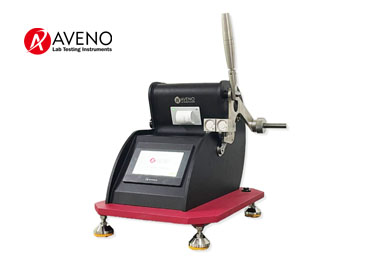
Introduction to Digital Tearing Tester

2025-06-06

The Digital Tearing Tester is a precision instrument used to measure the tear strength of various materials. It uses advanced electronic technology and precise sensors to accurately measure the tear strength of various materials. It is widely used in many industries such as textiles, leather, plastics, paper, etc. It aims to accurately quantify the resistance of materials under tearing force, and provide key data support for product quality control, material performance research and production process optimization.


Fabric Tearing Testing machine has a wide range of applications.

  1. In the textile industry, it can test the tear resistance of textiles and non-woven fabrics to provide data support for product durability.
  2. In the packaging industry, it can be used to test the tear resistance of packaging materials such as plastic film, paper, and cardboard to ensure that the packaging is not easily damaged during transportation and use, thereby protecting product safety.
  3. In the rubber, plastic, leather and other industries, it also plays an important role in helping companies control product quality and improve product performance.


The Digital Elmendorf Tearing Tester has many advantages, such as color touch screen display, pneumatic clamping of samples, automatic shearing incision, automatic release of pendulum, etc. The instrument can automatically detect and analyze data, and can be configured with computer software for online testing. This instrument has the characteristics of high test accuracy, high degree of automation, powerful functions, reliable performance, and simple operation.


Elmendorf Tearing Strength Tester, with its high precision, easy operation and multi-function, has become a powerful assistant for material tearing performance testing in many industries, making important contributions to improving product quality and promoting industry development.


AVENO recommended product:


Digital Tearing Tester AG11-3

Digital Tearing Tester


Any demand can be referred to us!

Sales Dept Tel: +86 15280858852

Email: sales@avenotester.com

Skype: sales@avenotester.com

Web: www.avenotester.com


The color guardian of the textile industry

2025-06-06

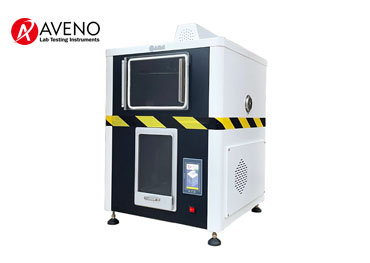
Gas Fume Chamber plays an indispensable role in the production and quality control of textiles. As people's requirements for textile quality continue to increase, the color fastness of textiles has become a key quality indicator. Gas Fume Chamber is a member of the guardian of textile quality assurance. So what is Gas Fume Chamber?


Gas Fume Chamber is mainly used to test the color change of textiles when they are exposed to atmospheric nitrogen oxides produced by gas combustion. It simulates the specific gas atmosphere that textiles may encounter in real environments to test their color stability.


How the Gas Fume Tester Works

The textile sample and the control standard sample are placed in the gas smoke at the same time, and the test ends when the color of the control standard sample changes to the color equivalent to the fading standard. The color change of the sample is evaluated using a gray sample card. If no color change of the sample is observed after one test cycle, the test cycle can be continued for a specified number of times or the number of test cycles required to produce the specified color change of the sample.


Through the Gas Fume Chamber test, manufacturers can understand in advance the color changes of textiles in a specific gas environment, so as to take corresponding measures to improve the production process, select suitable dyes and auxiliaries, so as to improve the color fastness of textiles and meet consumers' demand for high-quality textiles.


Standards Of Lab Gas Fume Chamber

AATCC 23, ISO 105 G02, BS EN ISO 105-G02


Although Gas Fume Chamber is only a small part of textile testing instruments, it plays a huge role in the textile industry. It is like a color guardian elf, silently guarding the color quality of textiles and bringing us more beautiful and durable textiles.


AVENO recommended product:

Gas Fume Chamber AG43

Gas Fume Chamber

Any demand can be referred to us!

Sales Dept Tel: +86 15280858852

Email: sales@avenotester.com

Skype: sales@avenotester.com

Web: www.avenotester.com

Tags